
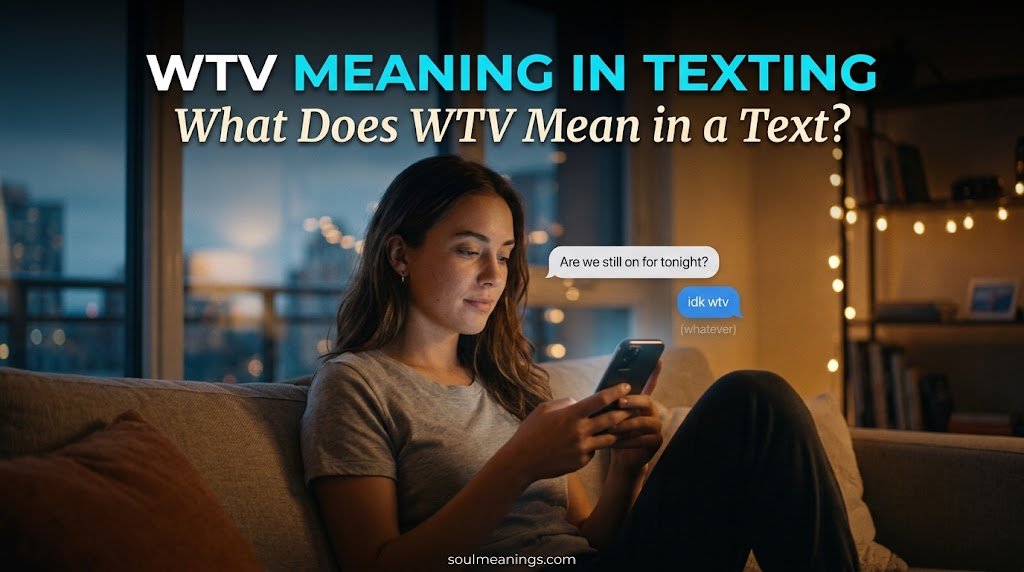
Texting has its own shorthand. A few letters can replace an entire phrase, and WTV is a good example. If someone sends you “WTV,” you might understand it instantly. However, the same abbreviation can carry a slightly different tone depending on the conversation.
So, what does WTV mean in texting? In most casual messages, WTV means “whatever.” People use it when they don’t have a strong preference, want to show indifference, or don’t want to continue an argument.
For example, someone might text, “WTV you want is fine,” to say that any choice works. On the other hand, a simple “WTV.” can sound much colder. It might suggest, “Whatever. I don’t care.”
This guide explains WTV meaning in text messages, how people use it on social media, when it can sound rude, and how to respond when someone sends it.
What Does WTV Mean in Texting?
WTV usually means “whatever” in texting and online conversations.
It’s an informal abbreviation that saves time and space. Instead of typing the full word, someone can write three letters: WTV.
You’ll commonly see it in:
- Text messages
- Snapchat conversations
- Instagram DMs
- TikTok comments
- Group chats
- Gaming chats
- Casual online conversations
The exact feeling behind WTV depends on the sentence around it.
Consider these two examples:
“WTV you choose is fine with me.”
Here, WTV sounds flexible. The person is saying that they don’t mind which option you choose.
Now compare it with:
“WTV.”
That response can feel dismissive. It may communicate frustration, boredom, or a lack of interest.
WTV Meaning in Text at a Glance
| WTV meaning | What it can communicate | Typical tone |
| Whatever | Any choice is acceptable | Neutral |
| Whatever | The issue doesn’t matter | Casual |
| Whatever | I don’t really care | Indifferent |
| Whatever | I don’t want to argue | Dismissive |
| Whatever | Stop discussing it | Potentially annoyed |
The important point is simple: WTV doesn’t automatically mean “I don’t care.” Context determines the tone.
What Does WTV Stand For?
WTV stands for “whatever.”
The abbreviation comes from shortening the word while keeping enough letters to make its meaning recognizable. Similar texting shortcuts include IDK for “I don’t know,” IDC for “I don’t care,” and NVM for “never mind.”
WTV belongs to informal digital language. It isn’t normally used in formal writing.
For example, a friend might say:
“WTV movie you pick, I’ll watch it.”
A teacher, employer, or business representative would generally write:
“Whatever movie you choose is fine.”
The difference isn’t about grammar alone. It reflects the setting and relationship between the people communicating.
Why Do People Use WTV Instead of “Whatever”?
Speed is one reason. Texting encourages people to shorten common words and phrases.
WTV also gives a message a casual feel. It can make a conversation sound relaxed when both people already understand the shorthand.
However, abbreviations can remove some emotional clues. When someone writes “whatever,” the extra letters can make the message feel slightly softer than a blunt “WTV.”
That’s why the abbreviation sometimes creates confusion.
WTV Meaning Depending on the Context
The meaning of WTV in texting doesn’t change completely from one conversation to another. Instead, its tone and intention can shift.
WTV Meaning as “Whatever”
This is the most direct interpretation.
Someone might use WTV when they don’t have a preference.
“WTV restaurant you choose works for me.”
The person isn’t necessarily annoyed. They’re simply leaving the decision to you.
You could interpret that as:
“Pick whichever restaurant you want. I’m okay with it.”
WTV Meaning as “I Don’t Care”
Sometimes WTV communicates indifference.
For example:
“Should we go tonight or tomorrow?”
“WTV.”
That response may mean:
“I don’t really care which day.”
This interpretation overlaps with “whatever,” but it carries more emotional distance.
The surrounding conversation matters. If the person has been relaxed throughout the exchange, WTV may be harmless. If you’ve been arguing, the same response could sound irritated.
WTV Meaning as “Anything Is Fine”
WTV can also show flexibility.
Imagine you’re planning a movie night:
“Comedy or horror?”
“WTV you want.”
Here, the sender isn’t rejecting your choices. They’re giving you control over the decision.
This use is especially common among friends who don’t need to discuss every small choice.
WTV Meaning as Dismissal
The sharpest use appears when someone wants to end a discussion.
“I already told you why I did it.”
“WTV.”
In this context, WTV may mean:
“Whatever. I’m done talking about this.”
That doesn’t necessarily mean the person is angry. Still, the message can feel dismissive because it closes the door on further discussion.
WTV Examples in Text Messages
The best way to understand WTV meaning in text messages is to look at real conversational patterns.
| Text message | Possible meaning | Tone |
| “WTV you want is fine.” | Any choice works | Neutral |
| “WTV works for me.” | I have no preference | Casual |
| “WTV you wanna do.” | Your choice | Relaxed |
| “WTV, let’s just go.” | Let’s stop discussing it | Impatient |
| “WTV 🙄” | Whatever / I’m annoyed | Dismissive |
| “WTV happens, we’ll handle it.” | Whatever happens | Reassuring |
| “Pick WTV you like.” | Choose anything you prefer | Flexible |
Notice something important: WTV doesn’t always express negativity.
A common mistake is assuming every short abbreviation has an attitude behind it. That’s not how casual texting works.
For instance:
“WTV you want for dinner?”
could simply mean:
“Whatever you want for dinner?”
The sender may genuinely be giving you the choice.
Is WTV Rude in Texting?
WTV isn’t automatically rude. Its tone depends heavily on context.
A friendly sentence can make WTV sound relaxed:
“WTV you want to watch is cool with me.”
A short standalone reply can feel different:
“WTV.”
The second version provides almost no emotional information. Because texting removes facial expressions and vocal tone, readers often fill in the blanks themselves.
What Makes WTV Sound Rude?
Several details can influence how the abbreviation feels.
Message length: A longer sentence usually provides more context.
Punctuation: “WTV.” may feel more final than “WTV!”
Emojis: An eye-roll emoji can make the message clearly sarcastic or irritated.
Previous conversation: An argument changes how a short reply is likely to be interpreted.
Relationship: Close friends may use WTV casually without intending offense.
Timing: A sudden one-word response after a long conversation can signal frustration.
Compare these:
“WTV you prefer 😊”
and
“WTV.”
The words are almost identical. The emotional effect isn’t.
Is “WTV” More Rude Than “Whatever”?
Not necessarily. However, abbreviations can sometimes feel more abrupt because they’re shorter.
“Whatever” gives the reader a complete word with a recognizable conversational rhythm.
“WTV” feels compressed. In a tense conversation, that compression can make the message appear colder.
Still, you shouldn’t judge the sender’s intention from three letters alone.
WTV Meaning in a Text From a Girl or Guy
WTV generally has the same meaning whether a girl or guy sends it.
There isn’t a special definition of WTV based on the sender’s gender.
If someone texts:
“WTV you want.”
the likely meaning is still “whatever you want.”
What matters more is how that person normally communicates.
Someone who regularly uses abbreviations may send WTV without any negative intention. Another person who rarely uses short forms might use it specifically because they’re frustrated or trying to end a conversation.
What Does WTV Mean From Someone You Like?
Romantic situations can make short messages seem more mysterious than they really are.
If someone you’re interested in says:
“WTV you want lol”
that may simply mean they’re letting you decide.
If they respond:
“WTV.”
after an argument, the tone could be very different.
Don’t build an entire interpretation around the abbreviation. Look at the messages before and after it.
For example, these clues can help:
- Are they still asking questions?
- Are they using emojis?
- Did the conversation involve an argument?
- Do they normally use abbreviations?
- Did they continue talking afterward?
- Did they respond warmly before using WTV?
The conversation pattern tells you more than WTV itself.
Read More: “Sent as a Text Message” Meaning: What It Means on Your Phone
WTV Meaning on Snapchat, Instagram, TikTok, and Other Social Media
The common WTV meaning in texting also carries over to social platforms.
WTV on Snapchat
Snapchat conversations often rely on short, casual language. WTV can appear in direct messages or quick replies.
“WTV u wanna do later?”
Here, the sender means “whatever you want to do later.”
WTV on Instagram
Instagram users may use WTV in DMs and comments.
For example:
“WTV, I’m still posting it 😂”
The abbreviation could show playful indifference.
WTV on TikTok
TikTok comments often favor compressed expressions because users communicate quickly.
Someone might comment:
“WTV bro 😭”
The meaning could range from playful dismissal to genuine annoyance depending on the thread.
WTV in Group Chats
Group chats create another common situation.
Suppose friends are deciding where to eat:
“Pizza or burgers?”
“WTV.”
That usually means the person doesn’t want to choose.
However, if the group has spent 20 minutes arguing, “WTV” may mean the sender is tired of the discussion.
WTV in Gaming Chats
Gaming conversations also favor quick abbreviations.
A player might say:
“WTV map you guys want.”
The intended meaning is “whatever map you guys want.”
The same basic definition remains intact across platforms.
WTV vs. Whatever: What’s the Difference?
The basic meaning remains the same, but WTV feels more abbreviated and casual.
| WTV | Whatever |
| Informal | Informal to neutral |
| Quick to type | Full word |
| Common in digital chats | Works in speech and writing |
| Can feel abrupt | Usually gives more context |
| Best for casual conversations | More broadly usable |
Imagine two friends planning a weekend:
“WTV day works for me.”
That sounds like casual texting.
In a more polished message, you might write:
“Whatever day works best for you is fine with me.”
The second sentence takes longer but leaves less room for confusion.
When Is “Whatever” Better?
Use the full word when:
- You’re writing professionally.
- You’re speaking to someone unfamiliar with texting slang.
- The message could be misunderstood.
- You’re discussing something emotionally sensitive.
- You want your tone to sound especially clear.
WTV works best when the relationship and context already support casual shorthand.
WTV vs. Similar Texting Abbreviations
WTV isn’t the only abbreviation that can express indifference or uncertainty. Several others overlap with it.
| Abbreviation | Full meaning | Main difference |
| WTV | Whatever | Any option / indifference |
| IDC | I don’t care | Directly expresses lack of concern |
| IDK | I don’t know | Shows uncertainty |
| NVM | Never mind | Withdraws a question or statement |
| TBH | To be honest | Introduces an honest opinion |
| IMO | In my opinion | Introduces a personal view |
| WYD | What are you doing? | Asks about someone’s activity |
WTV vs. IDC
These two get confused frequently.
“WTV you want.”
This can mean:
“Choose whatever you want.”
Meanwhile:
“IDC what you choose.”
more directly means:
“I don’t care what you choose.”
WTV can sound softer because it leaves room for flexibility.
WTV vs. IDK
IDK means “I don’t know.”
If someone asks:
“What should we eat?”
and you answer:
“IDK.”
you’re saying you don’t know what to choose.
If you answer:
“WTV.”
you’re saying you don’t mind what gets chosen.
Those are different responses.
WTV vs. NVM
NVM means “never mind.”
Someone might write:
“Can you send me that photo? NVM, found it.”
WTV doesn’t work the same way. It usually expresses “whatever” rather than withdrawing a previous request.
How to Respond When Someone Texts “WTV”
Your response should depend on what the sender appears to mean.
If They Mean “Anything Is Fine”
Make the decision yourself.
“Cool. Let’s do pizza.”
There’s no need to keep asking them to choose.
If They Sound Annoyed
Don’t immediately match their attitude.
Instead, you can say:
“Are you upset, or are you okay with whatever?”
That gives them an easy chance to clarify.
If They Mean “I Don’t Care”
Take the pressure off the conversation.
“Okay, I’ll pick.”
A simple response can prevent a small decision from turning into an unnecessary argument.
If You’re Unsure
Look at the conversation before responding.
For example, if you’ve been discussing dinner for 20 minutes and they suddenly send “WTV,” they may simply be tired of deciding.
If they sent “WTV 😂” while joking with you, the tone is probably lighter.
How to Use WTV in a Text
Using WTV is simple as long as the setting is informal.
You can use it when you’re talking with:
- Friends
- Siblings
- Close relatives
- Online friends
- Gaming teammates
- Casual social contacts
Natural WTV Examples
“WTV you pick is good.”
“WTV works for me.”
“WTV you wanna watch?”
“WTV happens, we’ll deal with it.”
“WTV, let’s just go.”
The abbreviation usually works best when the surrounding sentence makes the intention obvious.
A Quick Rule
Use WTV when speed and casual tone matter more than formal wording.
That’s the heart of its practical use.
When You Shouldn’t Use WTV
Although WTV is common online, it doesn’t belong in every setting.
Avoid it in:
- Job applications
- Formal emails
- Business proposals
- Academic assignments
- Official complaints
- Customer-service communication
- Professional introductions
- Serious workplace discussions
For example, imagine your manager asks:
“Which meeting time works best for you?”
Replying:
“WTV.”
could appear careless.
A better response would be:
“Either time works for me.”
The second version communicates the same basic idea without sounding dismissive.
Why Context Matters So Much
Digital communication lacks many cues found in face-to-face conversations.
When someone says “whatever” aloud, you can hear whether they’re joking, frustrated, relaxed, or sarcastic.
Text removes that vocal information.
That’s why a tiny abbreviation can create a surprisingly large misunderstanding.
Here are five focused FAQs you can use for the WTV Meaning in Texting article.
FAQS
What does WTV mean in texting?
WTV usually means “whatever” in texting, DMs, and casual online conversations. Depending on the context, it can show flexibility, indifference, or dismissal.
Does WTV mean “I don’t care”?
Sometimes. WTV can mean “I don’t care” when someone doesn’t have a preference or doesn’t want to discuss something further. However, it can also simply mean that any option is acceptable.
Is WTV rude in a text?
WTV isn’t automatically rude. A message like “WTV you want is fine” can sound relaxed. A short response such as “WTV.” may sound dismissive, especially during an argument.
What does WTV mean from a girl or guy?
WTV generally has the same meaning regardless of who sends it. It usually means “whatever.” The person’s tone, communication style, and the surrounding conversation matter more than their gender.
How should I respond when someone texts WTV?
Your response depends on the situation. If they’re saying they don’t have a preference, simply make the decision. If WTV seems annoyed or dismissive, you can ask whether something is wrong or give the conversation some space.
Conclusion
WTV usually means “whatever” in texting, but its tone can change depending on the conversation. Someone might use it to say they don’t have a preference, while another person might use it to show indifference or end an argument.The surrounding words matter. For example, “WTV you want is fine” usually sounds flexible and relaxed. A standalone “WTV.” can feel much more dismissive, especially during a tense conversation.









1 thought on “WTV Meaning in Texting: What Does WTV Mean in a Text?”