
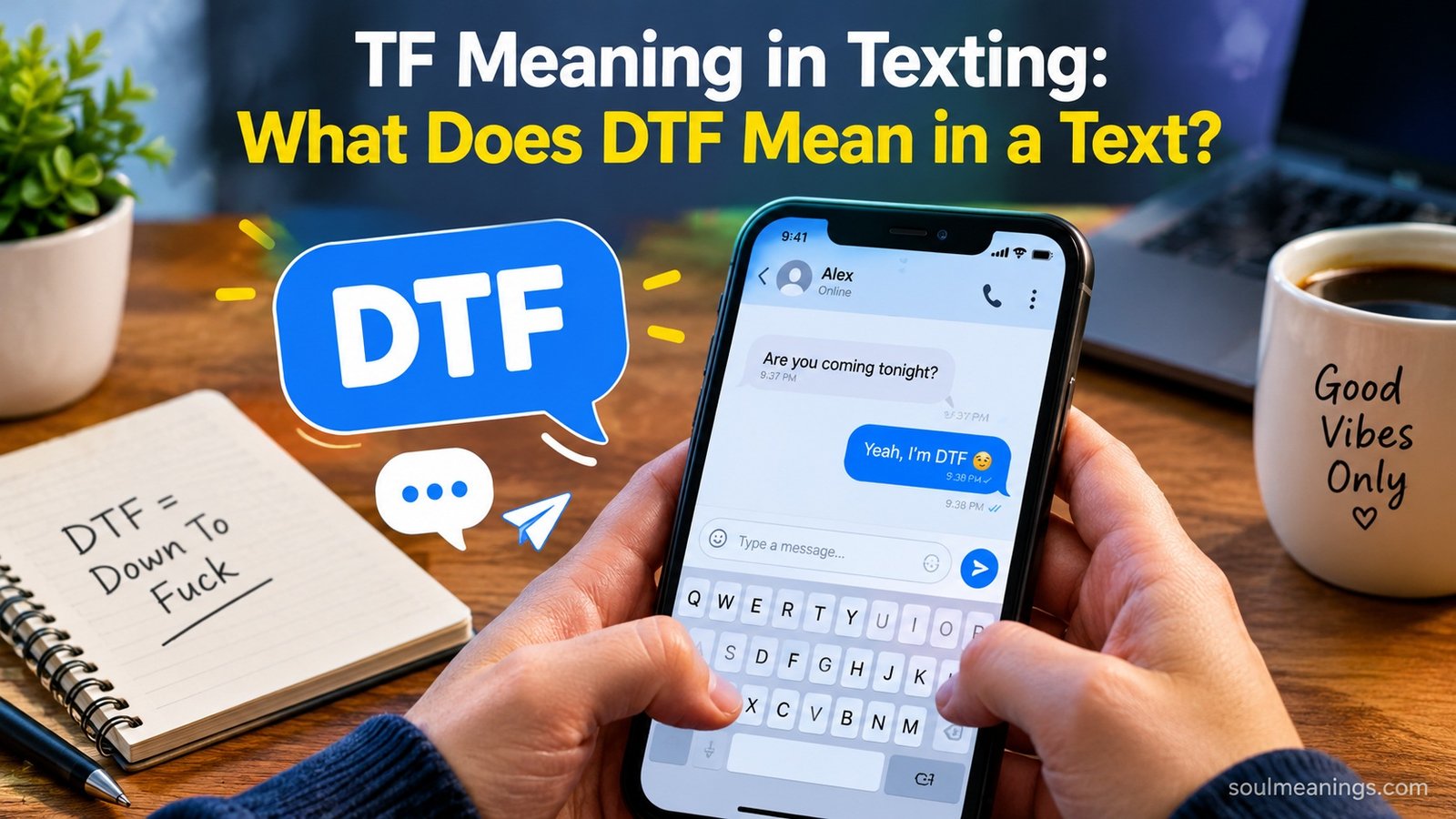
Seeing DTF in a text message can leave you wondering what those three letters actually mean. Unlike many harmless texting abbreviations, DTF usually carries a clear adult meaning.
In texting, dating apps, social media, and online conversations, DTF commonly means “down to f*.”** In simple terms, it usually describes someone who is willing or interested in having casual sex. The phrase is informal, sexually explicit, and often very direct.
However, context matters. Someone might use DTF seriously, jokingly, flirtatiously, or as part of a meme. The meaning can also change when the abbreviation appears outside dating or social conversations.
Understanding DTF meaning in texting can help you read the tone of a message without jumping to conclusions. It can also help you decide how to respond when someone sends you “DTF?” or uses the abbreviation in a conversation.
What Does DTF Mean in Texting?
DTF means “down to f*” in most texting and dating contexts.** The expression generally communicates a willingness to have sex, particularly casual sex without necessarily suggesting a romantic relationship.
The phrase comes from the expression “down to,” which means willing or interested in doing something. For example, someone might say, “Are you down to grab coffee?” In that sentence, “down to” simply means willing to do something.
DTF adds a sexually explicit word to that structure. As a result, its meaning becomes much more specific.
When someone texts:
“Are you DTF?”
they’re usually asking whether you’re interested in having sex.
The abbreviation saves space and softens the appearance of the explicit phrase. Still, its meaning remains sexual.
DTF Meaning in Simple Words
In simple language, DTF means sexually interested or willing to have casual sex.
It doesn’t normally mean:
- Looking for a serious relationship
- Wanting to fall in love
- Asking someone on a traditional date
- Wanting to become exclusive
- Looking for emotional commitment
That doesn’t mean a person who uses DTF can never want a relationship. Human intentions aren’t that simple. The abbreviation itself, however, usually focuses on sexual interest rather than romantic commitment.
Is DTF a Sexual Term?
Yes. In its most common texting use, DTF is a sexual slang term.
It’s also fairly blunt. Some adults use it casually among people who already understand each other’s boundaries. Others consider it crude, disrespectful, or overly forward.
That difference matters.
The same three letters can feel playful between two consenting adults who already flirt with each other. Sent unexpectedly to a stranger, however, the message can feel intrusive or uncomfortable.
What Does DTF Mean From a Guy?
When a guy uses DTF in a text or dating conversation, the most common interpretation is that he’s expressing sexual interest.
For example, if someone has been discussing casual dating and then asks, “Are you DTF?” he’s probably being direct about what he wants.
However, don’t treat the abbreviation as a complete statement of his intentions. DTF doesn’t automatically tell you whether he wants to date, whether he’s attracted to you emotionally, or what kind of relationship he expects.
Context fills in those gaps.
Consider these two situations:
Situation A:
Two people have been flirting on a dating app. One asks, “So, are you DTF?”
The sexual interpretation is obvious.
Situation B:
Someone posts “DTF” as part of a joke or meme.
That doesn’t necessarily mean they’re making a genuine sexual proposition.
The surrounding conversation matters more than the abbreviation alone.
What Does It Mean If a Guy Asks, “Are You DTF?”
When a guy asks “Are you DTF?”, he’s usually asking whether you’re willing to have sex.
The question is much more direct than:
- “Want to go on a date?”
- “Want to hang out?”
- “Are you interested in me?”
- “Would you like to get to know each other?”
A DTF question generally puts sexual interest front and center.
If you’re unsure what he means, you don’t have to interpret the abbreviation silently. A simple question such as “What are you looking for?” can clarify his expectations.
That’s often more useful than trying to decode every hidden meaning.
What Does DTF Mean From a Girl?
DTF has the same basic meaning regardless of whether a man or woman uses it. A girl or woman who says she’s DTF is generally communicating sexual willingness or interest.
The abbreviation doesn’t tell you why she’s using it.
She could be:
- Expressing genuine sexual interest
- Looking for casual sex
- Flirting
- Making a joke
- Using internet slang
- Responding to an established casual arrangement
Avoid attaching assumptions to the person simply because she uses the term.
For example, saying “I’m DTF” doesn’t automatically mean someone has a particular personality or dating style. It describes what they’re communicating in that moment and context.
Does DTF Mean She Wants a Relationship?
Usually, no.
DTF focuses on sexual interest. It doesn’t inherently communicate a desire for a committed relationship.
Someone can be sexually interested in another person and still want something serious later. Another person may want casual sex and nothing more. A third person may use DTF jokingly.
That’s why the best interpretation comes from the broader conversation.
If relationship intentions matter, ask directly.
DTF Meaning on Dating Apps
Dating apps are one of the places where DTF meaning in texting becomes especially relevant.
A person might use DTF in a profile, opening message, prompt response, or private chat to communicate that they’re interested in casual sexual encounters.
The abbreviation can therefore act as a shortcut for setting expectations.
For someone seeking a serious relationship, seeing DTF in a profile may be useful information because it can signal a mismatch in dating goals.
For someone seeking casual encounters, the same abbreviation may communicate exactly what they’re looking for.
DTF on Tinder, Bumble, and Other Dating Apps
On dating platforms, DTF can appear in several forms:
- “DTF tonight?”
- “Looking for someone DTF.”
- “Not here for a relationship. DTF only.”
- “Are you DTF?”
- “Just looking for something casual.”
These statements aren’t identical.
“DTF tonight?” is a direct sexual proposition.
“Looking for something casual” is broader and less explicit.
“Not here for a relationship” communicates a dating preference without necessarily using sexual language.
That distinction can matter when interpreting someone’s intentions.
Why Context Matters on Dating Apps
Dating profiles often contain limited information. A three-letter abbreviation can therefore seem more definitive than it actually is.
Someone who writes DTF may be seeking casual sex. Someone else might use it as edgy humor. A third person may repeat slang without considering how strongly it communicates a particular intention.
Reading the entire profile and conversation gives you a much clearer picture.
DTF Meaning on Snapchat, Instagram, TikTok, and Social Media
The DTF meaning on social media generally remains the same when it appears in a dating or sexually suggestive context.
It can appear in:
- Direct messages
- Comments
- Captions
- Memes
- Dating-related posts
- Private stories
- Group chats
Social platforms also encourage compressed language. Users frequently turn longer phrases into abbreviations because they’re quick to type and easy to recognize.
Still, social media introduces another layer: humor.
Someone might post DTF as a meme without literally asking another person for sex.
DTF in DMs
In a private message, context becomes especially important.
Suppose someone sends:
“Hey, you seem cute. You DTF?”
That’s probably a direct sexual proposition.
Now consider:
“This meme says everyone is DTF after midnight.”
Here, DTF is part of a joke rather than a direct proposition.
The letters haven’t changed. The conversational setting has.
DTF in a Caption or Comment
Public posts can make DTF more ambiguous.
A caption such as “DTF” could be sexual slang, humor, or a reference to internet culture. A comment under a dating-related post may carry a more literal meaning.
Don’t assume that every occurrence represents a serious invitation.
How to Tell What DTF Means in a Specific Text
If someone sends you DTF and you’re unsure how to interpret it, examine the surrounding conversation.
Look at the Conversation Topic
If you’ve been discussing dating, hookups, attraction, or physical intimacy, the sexual meaning is highly likely.
If you’re discussing work, gaming, school, or an unrelated topic, check whether another interpretation makes more sense.
Check What Came Before It
Previous messages often provide the strongest clue.
For example:
“Want to come over tonight?”
“Yeah.”
“DTF?”
Here, the meaning is fairly clear.
By contrast:
“This new slang is wild.”
“People keep saying DTF.”
In that case, someone may simply be discussing the abbreviation itself.
Consider Who Sent It
The relationship between the people matters.
A message from a dating-app match may have a different meaning from the same abbreviation appearing in a discussion about internet slang.
Look at the Words Around DTF
The surrounding words can reveal tone.
Compare:
- “Are you DTF?”
- “LOL, that movie had everyone acting DTF.”
- “My friend keeps saying DTF. What does it mean?”
The first is a direct question. The second is humorous. The third is simply asking about vocabulary.
Consider Whether They’re Joking
Internet slang frequently appears in jokes, memes, and exaggerated posts.
A literal dictionary definition doesn’t always capture the speaker’s intention.
DTF in a Flirty Conversation
In a clearly flirty conversation, DTF usually has its standard sexual meaning.
If two adults have already discussed attraction and casual relationships, the abbreviation may simply be a blunt way to move the conversation toward sexual intentions.
Still, flirting isn’t the same thing as consent.
A person can flirt without wanting sex. Someone can change their mind. Clear communication remains important even when the conversation feels playful.
DTF in a Joke or Meme
DTF often appears in humorous internet content because its meaning is recognizable and provocative.
For example, a meme might use DTF to exaggerate someone’s enthusiasm about going out, partying, or dating.
In these cases, the term may function as comedic slang rather than a literal proposition.
The safest approach is to look at the whole post instead of isolating the abbreviation.
DTF in an Unrelated Conversation
Sometimes abbreviations simply don’t fit the most obvious interpretation.
If someone sends DTF during an unrelated conversation, ask for clarification if necessary.
That’s particularly useful when the sender works in a specialized field or uses industry-specific abbreviations. Not every occurrence of DTF necessarily refers to sexual slang.
DTF vs. Similar Texting Terms
Several internet abbreviations overlap with DTF but aren’t interchangeable.
| Term | Common Meaning | Typical Context |
| DTF | Down to f*** | Casual sexual interest |
| NSA | No strings attached | Casual relationship or sex |
| FWB | Friends with benefits | Friendship combined with sexual activity |
| ONS | One-night stand | A single casual sexual encounter |
| WYD | What you doing? | General texting |
| HMU | Hit me up | Asking someone to contact you |
| WYA | Where you at? | Asking someone’s location |
The distinctions are worth knowing.
FWB, for example, usually describes an ongoing arrangement between friends. ONS generally refers to a one-time sexual encounter. NSA emphasizes the absence of romantic or emotional commitment.
DTF, on the other hand, mainly communicates willingness or interest in sex.
It doesn’t necessarily define the entire relationship.
Is DTF Rude or Offensive?
Whether DTF feels rude depends heavily on who uses it, how they use it, and who receives it.
Among consenting adults who already communicate casually about sex, it may seem straightforward.
Sent unexpectedly to a stranger, however, it can come across as crude or disrespectful.
The issue isn’t simply the abbreviation. Unwanted sexual communication can make a conversation uncomfortable regardless of the slang used.
For example, a person might feel comfortable discussing casual sex on a dating app but dislike receiving an explicit message from a coworker.
The setting changes everything.
When DTF May Be Taken the Wrong Way
DTF can cause problems when:
- Someone sends it without any previous flirting or sexual discussion.
- The recipient doesn’t know the sender well.
- It’s used in a workplace or professional setting.
- The recipient is looking for a serious relationship.
- The sender assumes sexual interest without asking.
- The message crosses someone’s personal boundaries.
A useful rule is simple: match your language to the relationship and setting.
Read More: TGIF Meaning in Text: What Does TGIF Mean in Messages, Chat, and Social Media?
How to Respond to “DTF?”
You don’t need one universal response. Your answer should reflect what you actually want.
If You’re Interested
If you’re interested, a direct response can prevent misunderstandings.
You might clarify what you’re looking for before agreeing to anything. For example, you can discuss whether both people want something casual or whether they have different expectations.
Clear communication avoids the classic problem of two people having completely different ideas about the same evening.
If You’re Not Interested
You can keep your response short.
Examples include:
- “No, I’m not interested.”
- “I’m looking for something different.”
- “That’s not what I’m looking for.”
- “No thanks.”
You don’t owe someone a long explanation.
If You’re Unsure What They Mean
Ask.
A simple:
“What do you mean by DTF?”
can remove the guesswork.
You can also ask:
“Are you asking about something casual?”
That’s especially useful when the conversation has been ambiguous.
If the Message Makes You Uncomfortable
You can end the conversation.
Depending on the platform and circumstances, you may also be able to block or report the account.
You don’t need to continue an uncomfortable conversation simply because someone started it.
Is DTF Appropriate to Use at Work or in Formal Messages?
Generally, no.
The common meaning of DTF is sexual and informal. That makes it a poor choice for professional emails, workplace chats, academic communication, customer service, or formal correspondence.
Even if you intend a different meaning, many readers will recognize the slang interpretation first.
That creates unnecessary confusion.
Professional communication benefits from precise language. If an abbreviation has a widely recognized adult meaning, using it casually at work can create an awkward situation very quickly.
Where DTF Is Usually Appropriate
| Setting | Suitability |
| Private adult dating conversation | Context-dependent |
| Casual adult group chat | Context-dependent |
| Dating app | Common |
| Social media meme | Possible |
| Professional email | Inappropriate |
| Workplace group chat | Usually inappropriate |
| Academic assignment | Inappropriate |
| Customer communication | Inappropriate |
The right vocabulary depends on the audience.
Other Meanings of DTF
Although DTF most commonly means “down to f*” in texting**, abbreviations can have multiple meanings across different fields.
Acronyms sometimes represent technical terms, organizations, processes, or phrases unrelated to internet slang.
That’s why context matters.
If you encounter DTF in a medical, scientific, business, technical, or specialized document, don’t automatically assume the texting definition.
The surrounding words should tell you which interpretation makes sense.
For ordinary texting and dating conversations, though, the sexual slang definition is by far the interpretation most readers expect.
Where Did DTF Come From?
The phrase behind DTF predates modern texting.
“Down to” has long been used informally to describe willingness to participate in something. Internet users later shortened longer expressions into compact abbreviations that could be typed quickly.
DTF became particularly recognizable through popular culture, entertainment, dating culture, and internet slang.
Its visibility increased because the phrase is short, provocative, and easy to remember. Those qualities make slang especially likely to spread through social platforms and casual digital communication.
The exact history of the abbreviation isn’t as important for understanding a modern text as its present-day usage.
Today, when DTF appears in a dating conversation, most people understand it as an explicit reference to sexual availability or interest.
DTF Meaning in Modern Internet Culture
Modern internet language changes quickly.
Words and abbreviations can move from niche communities into mainstream conversation within a short period. DTF is a good example because it has appeared in entertainment, memes, dating profiles, social media posts, and everyday digital conversations.
Its widespread recognition doesn’t mean everyone uses it in exactly the same way.
Some people use DTF literally. Others use it humorously. Some avoid it because they consider the wording too crude.
That’s normal for slang.
A term can be widely understood without being universally accepted.
The same pattern appears with many other internet abbreviations. Their meaning may remain stable while their tone changes depending on the community using them.
A Practical Example of DTF in a Conversation
Consider this fictional conversation:
Alex: “Are you free tonight?”
Jordan: “Maybe. What’s up?”
Alex: “I was thinking we could hang out.”
Jordan: “Sure. What did you have in mind?”
Alex: “Honestly, I’m DTF.”
Here, the context makes the meaning clear. Alex is communicating sexual interest rather than simply suggesting a friendly evening.
Now consider a different situation:
Alex: “What does DTF mean?”
Jordan: “It’s slang you see on dating apps.”
Alex: “Oh, got it.”
Here, DTF is simply being discussed as a vocabulary term.
The abbreviation hasn’t changed. The context has.
DTF vs. “Down to Date”
One common misunderstanding deserves special attention.
Some readers assume DTF means “down to date.” In standard internet slang, that isn’t the common meaning.
When someone uses DTF in a dating or sexual context, the established interpretation is “down to f*.”**
“Down to date” can certainly be written out as a phrase, but DTF isn’t normally the standard abbreviation for it.
That distinction matters because dating and casual sex communicate different intentions.
If someone says they’re DTF, don’t automatically interpret that as “interested in dating me.”
Does DTF Mean a One-Night Stand?
Not necessarily.
DTF indicates sexual willingness or interest, but it doesn’t automatically specify how long the relationship or encounter will last.
A one-night stand is a specific type of casual sexual encounter. DTF is broader.
Someone might be DTF while looking for:
- A one-time encounter
- Casual sex
- An ongoing casual arrangement
- A friends-with-benefits relationship
The abbreviation alone doesn’t establish which arrangement the person wants.
That’s why direct conversation matters.
Does DTF Mean No Strings Attached?
Not automatically.
People sometimes use DTF and NSA in similar conversations, but they don’t mean exactly the same thing.
NSA specifically emphasizes a relationship without romantic or emotional obligations. DTF primarily communicates sexual willingness.
Someone can be DTF without explicitly saying they want an NSA arrangement.
Never treat related slang terms as exact synonyms.
DTF Meaning: Key Facts to Remember
Here are the most important points:
- DTF usually means “down to f*.”**
- The common texting meaning is sexual.
- It often refers to casual sex or sexual willingness.
- DTF doesn’t automatically mean someone wants a relationship.
- It doesn’t necessarily mean a one-night stand.
- It doesn’t automatically mean “no strings attached.”
- Context can make the abbreviation serious, humorous, or conversational.
- DTF is generally unsuitable for professional communication.
- Anyone can use the abbreviation regardless of gender.
- If you’re unsure, asking for clarification is better than guessing.
FAQS
What does DTF mean in texting?
DTF usually means “down to f*.”** In texts, dating apps, and social media, it generally expresses sexual interest or willingness to have casual sex.
What does DTF mean from a guy?
When a guy uses DTF in a dating or flirty conversation, he usually means he’s sexually interested. However, DTF alone doesn’t reveal whether he wants a relationship or something casual.
Does DTF mean “down to date”?
No. In common texting slang, DTF means “down to f*,”** not “down to date.” The phrase usually communicates sexual interest rather than romantic intentions.
Does DTF mean someone wants a relationship?
Not necessarily. DTF mainly communicates sexual interest and doesn’t automatically indicate that someone wants dating, commitment, or a serious relationship.
How should you respond to “DTF?”
Your response depends on your comfort and intentions. If you’re interested, clarify expectations. If you’re not interested, you can simply say “No thanks.” If you’re unsure, ask what the person means.
Conclusion
Understanding DTF meaning in texting is fairly simple once you know the context. DTF usually means “down to f*”** and commonly expresses sexual interest or willingness to have casual sex. It doesn’t automatically mean dating, commitment, a relationship, or a one-night stand.
Because texting slang can carry different tones, always consider the conversation around the abbreviation. It may be a serious question, playful slang, or part of a joke. When the meaning or intention isn’t clear, asking directly is often the best way to avoid confusion.









1 thought on “TF Meaning in Texting: What Does DTF Mean in a Text?”