
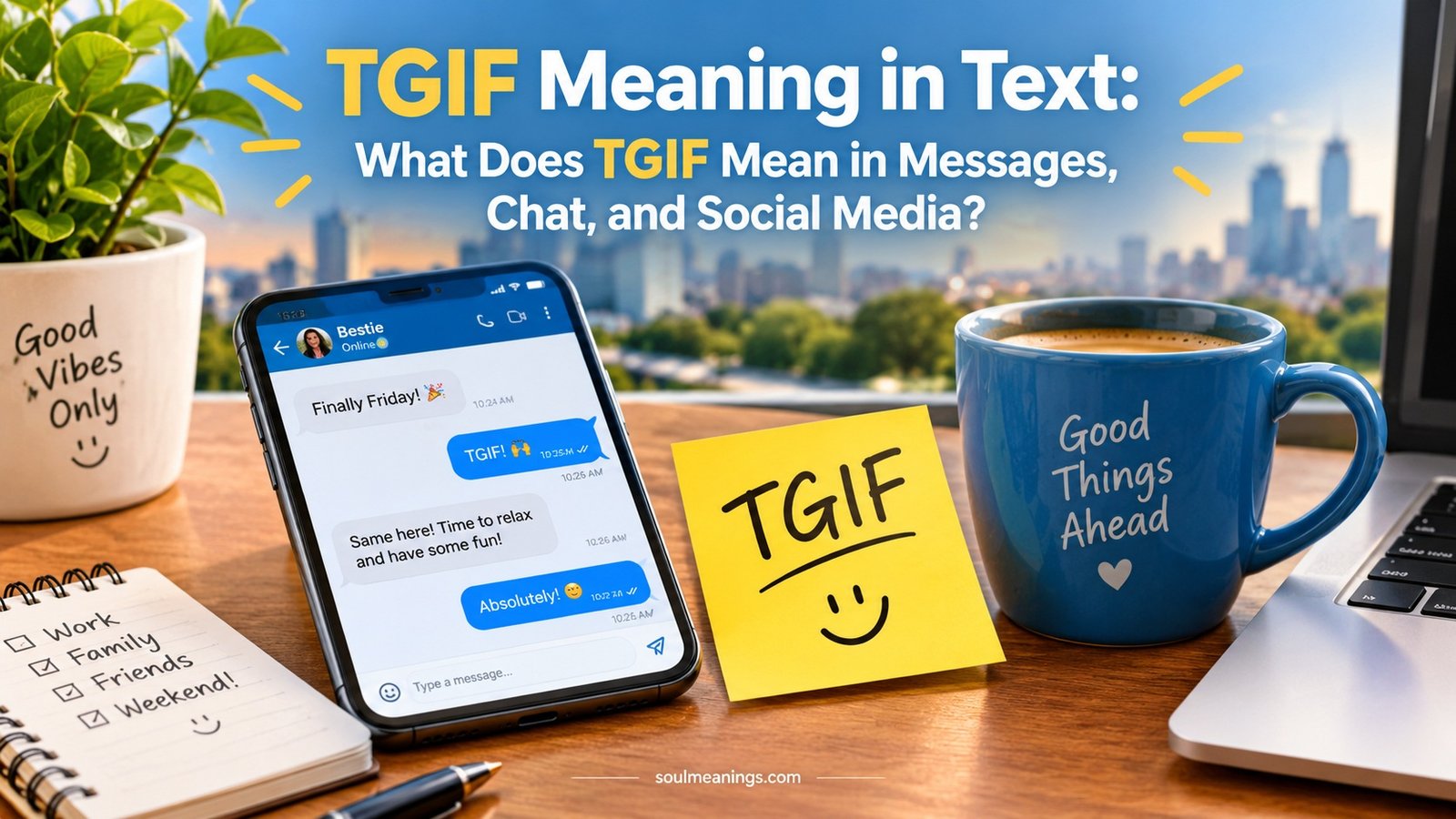
If someone texts “TGIF!” After a long week, they’re usually celebrating one simple thing: Friday has finally arrived. The abbreviation stands for “Thank God It’s Friday” and has become one of the most recognizable expressions for weekend excitement.
You’ll see the TGIF meaning in text conversations between friends, coworkers, classmates, and family members. It also appears in social media captions, memes, comments, and hashtags. Depending on the context, TGIF can express relief, excitement, humor, exhaustion, or anticipation for weekend plans.
Although the phrase contains the word “God,” many people use TGIF as a familiar expression rather than as a literal religious statement. The surrounding conversation usually tells you what the sender means.
What Does TGIF Mean in Text?
TGIF means “Thank God It’s Friday.” In texting, people typically use it to show that they’re happy the work or school week has ended and the weekend is beginning.
For example:
“TGIF! I’m exhausted after this week.”
Here, the sender isn’t simply announcing that it’s Friday. They’re expressing relief after a tiring week.
Another person might write:
“TGIF! Dinner tonight?”
In this case, TGIF carries a more social tone. The sender is excited about Friday and may be looking forward to going out.
The abbreviation works because the meaning is widely understood. Instead of typing the entire phrase, four letters communicate the same idea quickly.
TGIF Meaning in Text at a Glance
| Expression | Meaning | Common feeling |
| TGIF | Thank God It’s Friday | Relief or excitement |
| TGIF! | Friday is finally here | Strong enthusiasm |
| TGIF | Glad the week is over | Exhaustion and relief |
| TGIF | Ready for the weekend | Celebration |
| TGIF, any plans? | Looking forward to Friday | Social excitement |
| TGIF… | The week was difficult | Tired relief |
The exact tone depends on the words around it, punctuation, emojis, and the relationship between the people chatting.
What Does TGIF Stand For?
TGIF stands for “Thank God It’s Friday.”
Each letter represents a word:
- T = Thank
- G = God
- I = It’s
- F = Friday
The phrase uses “It’s”, which is a contraction of “it is.” Therefore, the expanded sentence means something close to “Thank God it is Friday.”
In everyday American English, the phrase expresses appreciation or relief that Friday has arrived.
For many people, Friday represents the end of the traditional Monday-through-Friday work or school schedule. That makes TGIF a compact way to celebrate the transition into the weekend.
Does TGIF Always Have a Religious Meaning?
Not necessarily.
Some people use “Thank God” literally as an expression connected with their faith. Others use the phrase idiomatically, much like saying “Thank goodness it’s Friday.”
For example:
“TGIF! I thought this week would never end.”
The speaker may simply be relieved that the week is over. Nothing in the message necessarily indicates a religious intention.
That distinction matters when interpreting TGIF in text messages. The word “God” doesn’t automatically make every use of the abbreviation a religious statement.
TGIF Meaning in Different Texting Contexts
The meaning stays broadly consistent, but the emotional shade can change considerably.
TGIF After a Long Workweek
This is probably one of the most common uses.
Imagine someone has spent five days dealing with deadlines, meetings, emails, customers, or demanding projects. On Friday afternoon, they send:
“TGIF. I need a break.”
The abbreviation communicates relief and fatigue at the same time.
In this context, TGIF is almost like putting down a heavy backpack after carrying it all week. The weekend represents breathing room.
People may use it when:
- A difficult project has ended
- They have finished a demanding week
- They’re leaving work for the weekend
- They want to relax
- They’re looking forward to sleeping in
- They have plans after work
TGIF in Friend Chats
Among friends, TGIF often becomes more playful.
“TGIF! What are we doing tonight?”
Here, the sender isn’t complaining about work. They’re opening the door to weekend plans.
Friends might use TGIF while discussing:
- Dinner
- Parties
- Movies
- Concerts
- Road trips
- Sports
- Shopping
- Gaming
- Weekend travel
- Relaxing at home
The abbreviation can therefore act as both an emotional reaction and a conversation starter.
TGIF in School Conversations
Students can use TGIF in much the same way.
“TGIF! No homework this weekend.”
The phrase signals relief from classes, assignments, tests, and early mornings.
A student might also write:
“TGIF That math test was brutal.”
The crying emoji doesn’t necessarily mean genuine sadness. In casual texting, it can add dramatic humor to the statement.
TGIF on Social Media
Social media gives TGIF an even broader life.
People use #TGIF in captions, posts, comments, and memes to celebrate Friday. A photo of friends going out, a picture of a coffee, or a casual weekend selfie might include the hashtag.
Common examples include:
- TGIF!
- #TGIF
- TGIF vibes
- TGIF mood
- TGIF, finally!
- TGIF weekend mode
On social media, the expression often becomes less about the literal words and more about a shared cultural feeling: the weekend has arrived.
TGIF Examples in Text Messages
Context makes abbreviations easier to understand. Consider these examples.
“TGIF! I’m ready to relax.”
This expresses relief and anticipation.
The sender has probably had a busy week and wants downtime.
“TGIF! Are we still going out tonight?”
This has a social and excited tone.
The sender is using Friday as a reason to start making weekend plans.
“Finally, TGIF!”
The word “finally” strengthens the sense of relief.
It suggests the week felt unusually long or difficult.
“TGIF”
This combination often means:
“I’m exhausted, but at least the week is over.”
The emoji adds emotional context that the abbreviation alone doesn’t provide.
“TGIF”
The laughing emoji can make the expression humorous.
The sender may be joking about surviving a chaotic week.
“TGIF… I need coffee.”
The ellipsis creates a slower, more tired feeling. It suggests the sender has had a rough week rather than simply celebrating Friday.
What Does TGIF Mean From a Girl or Guy?
TGIF doesn’t have a special meaning based on whether a girl or guy sends it.
A person of any gender can use the abbreviation to express excitement about Friday.
For example:
“TGIF! I’m so ready for the weekend.”
That message doesn’t automatically reveal romantic interest, attraction, or any hidden meaning.
Context matters more.
If someone writes:
“TGIF! Want to grab dinner with me tonight?”
The invitation might have romantic potential, but TGIF itself isn’t flirtatious. The invitation creates that possibility.
This is an important distinction when interpreting texting slang. A familiar abbreviation shouldn’t be treated like a secret code without evidence from the surrounding conversation.
Is TGIF Flirty?
TGIF isn’t inherently flirty.
It’s a general expression about Friday and the approaching weekend. Friends, relatives, coworkers, classmates, and romantic partners can all use it.
However, context can give it a flirtatious flavor.
Compare these two messages:
“TGIF! Finally time to relax.”
and:
“TGIF So, when am I seeing you tonight?”
The first message is completely ordinary. The second contains a personal invitation and a suggestive emoji.
The flirtation comes from the additional context, not from TGIF.
How to Tell Whether TGIF Is Flirty
Look at the rest of the conversation.
Consider:
- Is the person asking to meet privately?
- Are they using romantic or suggestive language?
- Are they sending flirtatious emojis?
- Have previous messages been romantic?
- Is there an established romantic relationship?
- Are they simply talking about ordinary weekend plans?
If the only message is “TGIF!”, the safest interpretation is simply “They’re happy it’s Friday.”
What Does TGIF Mean in Social Media?
On social media, TGIF usually signals excitement about Friday, the weekend, or leisure time.
Its short format makes it particularly convenient for captions and hashtags.
For example:
TGIF! Weekend mode activated. 🎉
Or:
Coffee, good music, and TGIF.
Or simply:
#TGIF
The hashtag can help connect a post with the broader Friday conversation.
Common TGIF Social Media Themes
You may see the expression alongside:
- Food and restaurant photos
- Nightlife
- Travel
- Weekend outfits
- Friends
- Family activities
- Entertainment
- Coffee
- Relaxation
- Workplace humor
- Friday memes
A humorous office meme might say:
“Me at 4:59 PM on Friday: TGIF.”
The joke works because many people recognize the feeling of watching the clock during the final minutes of a workday.
Is TGIF Formal or Informal?
TGIF is informal.
It’s perfectly natural in many casual conversations. However, you should consider your audience before using it professionally.
Good Places to Use TGIF
- Text messages
- Group chats
- Friend conversations
- Casual social media posts
- Informal workplace chats
- Personal messages
Places to Use Caution
- Formal business emails
- Legal documents
- Academic writing
- Official reports
- Professional client correspondence
- Formal announcements
For example, telling a close coworker:
“TGIF! Have a great weekend.”
sounds friendly.
A formal client email would usually sound better as:
“Wishing you a great weekend.”
The difference isn’t about correctness. It’s about register. TGIF belongs to relaxed, conversational communication.
TGIF Tone and Meaning Based on Context
The same abbreviation can communicate different shades of emotion.
| Text | Likely tone | What it suggests |
| TGIF! | Excited | Happy Friday has arrived |
| TGIF | Relieved | The week was exhausting |
| TGIF | Celebratory | Ready for weekend fun |
| TGIF, any plans? | Friendly | Interested in weekend activities |
| TGIF | Humorous | Making fun of the week |
| TGIF… | Tired | Friday arrived after a difficult week |
| TGIF | Warm | Happy about spending time with someone |
| TGIF | Enthusiastic | Strong sense of relief or celebration |
Punctuation can make a surprisingly noticeable difference.
“TGIF!” feels energetic.
“TGIF.” feels calmer or more matter-of-fact.
“TGIF…” can sound exhausted, sarcastic, or reflective.
Emojis add another layer of information. A party emoji suggests celebration while a tired-face emoji suggests relief after a difficult week.
TGIF vs. Similar Friday Expressions
Several expressions communicate nearly the same idea, but they aren’t identical.
| Expression | Typical meaning | Tone |
| TGIF | Thank God It’s Friday | Casual and familiar |
| Happy Friday | A positive Friday greeting | Friendly |
| Finally Friday | Friday arrived after a long week | Relieved |
| Friday vibes | Enjoying the Friday mood | Relaxed |
| It’s Friday! | Celebrating Friday | Direct |
| Weekend is here | Celebrating the start of the weekend | Casual |
| Thank goodness it’s Friday | Relief that Friday arrived | Conversational |
TGIF stands out because it’s short, recognizable, and emotionally expressive.
Someone who wants a more neutral phrase might choose “Happy Friday.” Someone emphasizing exhaustion might prefer “Finally Friday.”
Read More: TMU Meaning in Texting: What Does TMU Mean in a Text?
Where Did TGIF Come From?
The phrase “Thank God It’s Friday” became a well-established expression in American popular culture during the 20th century.
Its popularity reflects a simple social pattern. For people working a conventional five-day schedule, Friday marked the end of the workweek and the beginning of leisure time.
The expression became especially visible in popular culture through the 1970s and later decades.
One notable example was the 1978 American comedy film Thank God It’s Friday, which helped make the phrase even more recognizable in entertainment culture.
The expression also became associated with music, nightlife, workplace humor, advertising, and eventually digital communication.
Its staying power makes sense. The underlying experience hasn’t changed much: after several days of work or school, people often look forward to a break.
A Note About the Phrase’s History
It’s difficult to credit one person with inventing “Thank God It’s Friday.” The expression developed through ordinary language and popular usage rather than emerging from one clearly documented source.
That’s why claims that identify a single definitive inventor should be treated cautiously.
The phrase’s history is better understood as part of the growth of modern American workplace and leisure culture.
TGIF and American Friday Culture
Friday carries a distinctive cultural meaning in the United States.
For many workers with traditional Monday-through-Friday schedules, Friday afternoon creates a psychological transition. The workweek isn’t simply ending on a calendar. A different kind of time is beginning.
The distinction is easy to see:
Monday: Back to work.
Tuesday: Work continues.
Wednesday: Midweek.
Thursday: Almost there.
Friday: Weekend is approaching.
Saturday: Free time for many people.
Sunday: Weekend winds down.
Of course, not everyone follows this pattern.
Healthcare workers, restaurant employees, retail staff, emergency responders, hospitality workers, freelancers, and many others may work weekends or follow rotating schedules.
For someone who works Saturday through Wednesday, Friday might be an ordinary workday rather than the start of their weekend.
That makes TGIF a cultural expression rather than a universal description of everyone’s schedule.
TGIF vs. TGI Fridays: Are They the Same?
This causes some confusion because TGIF and TGI Fridays look almost identical.
They aren’t the same thing.
TGIF is the abbreviation for:
Thank God It’s Friday
TGI Fridays is the name of an American restaurant brand.
The restaurant’s name draws on the familiar phrase, which was already part of popular language.
This distinction matters when you’re searching for TGIF meaning in text. If someone sends “TGIF!” in a message, they’re almost certainly talking about Friday rather than inviting you to a restaurant.
Context settles the question quickly.
“TGIF! Let’s order pizza.”
This is about celebrating Friday.
“Want to meet at TGI Fridays?”
This refers to the restaurant.
The two expressions may look similar, but their meanings differ.
Common Ways People Use TGIF
People use TGIF for several closely related reasons.
Celebrating the End of the Workweek
A person may simply feel relieved that their regular workweek is finished.
Expressing Relief
Someone who’s had a difficult week can use TGIF almost like a verbal sigh of relief.
Showing Weekend Excitement
TGIF can introduce plans for dinner, travel, entertainment, or time with friends.
Starting a Conversation
A message such as:
“TGIF! Any plans?”
does more than celebrate Friday. It invites a response.
Adding Humor
The abbreviation works well with memes about deadlines, meetings, early mornings, and workplace struggles.
Celebrating Time Off
People who have vacation time, a long weekend, or special plans may use TGIF to show anticipation.
How to Reply When Someone Says “TGIF”
Your response depends on the relationship and the conversation.
Friendly Replies
If someone simply writes:
“TGIF!”
You can answer:
- “Absolutely!”
- “Finally!”
- “You said it!”
- “Happy Friday!”
- “I know, right?”
- “Have a great weekend!”
These responses acknowledge the shared feeling without making the conversation complicated.
If They Mention Weekend Plans
Suppose someone writes:
“TGIF! I’m going out tonight.”
A natural response could be:
“Nice! Where are you going?”
Or:
“Sounds fun. Who’s coming?”
The best reply usually picks up on the specific detail rather than responding to the abbreviation alone.
If You Want to Keep the Conversation Going
Try a simple question:
- “Any plans for the weekend?”
- “Doing anything fun tonight?”
- “How was your week?”
- “Are you finally getting some rest?”
- “What are you up to this weekend?”
TGIF can therefore serve as an easy conversational opening.
Common Mistakes About TGIF
Although the abbreviation is straightforward, people sometimes read more into it than necessary.
Assuming TGIF Is Always Religious
The phrase contains “God,” but everyday usage can be idiomatic.
Some people use it religiously. Others simply use it as a familiar expression of relief.
Assuming TGIF Is Flirty
It isn’t.
A romantic meaning comes from the surrounding conversation rather than the abbreviation itself.
Assuming TGIF Is Appropriate Everywhere
It’s informal. A professional message may benefit from more neutral wording.
Confusing TGIF With TGI Fridays
The abbreviation and restaurant name are related in wording but aren’t interchangeable.
Assuming Everyone Has Weekends Off
Not everyone works Monday through Friday. For people with nontraditional schedules, Friday may not carry the same significance.
FAQS
What does TGIF mean in text?
TGIF means “Thank God It’s Friday.” People commonly use it in texts to express relief, excitement, or happiness that Friday has arrived and the weekend is near.
What does TGIF stand for?
TGIF stands for “Thank God It’s Friday.” The letters come from the first letter of each word in the phrase.
Is TGIF flirty in a text?
No, TGIF isn’t automatically flirty. It usually expresses excitement or relief about Friday. A flirty meaning depends on the surrounding conversation, such as a romantic invitation or suggestive message.
What does TGIF mean on social media?
On social media, TGIF usually celebrates Friday and the beginning of the weekend. You may also see #TGIF in captions, memes, comments, and posts about relaxation, entertainment, friends, or weekend plans.
How should you reply when someone texts TGIF?
You can reply with “Absolutely!”, “Finally!”, “Happy Friday!”, or “Any plans for the weekend?” Your response can also match their mood if they’ve mentioned being tired, excited, or ready to go out.
Conclusion
Understanding TGIF meaning in text is simple once you know the context. TGIF stands for “Thank God It’s Friday” and usually expresses relief, excitement, or happiness that the work or school week has ended.
You may see TGIF in text messages, group chats, social media captions, workplace conversations, and memes. While the phrase includes the word “God,” people often use it as a casual expression rather than a religious statement. It also isn’t inherently flirty or romantic.








1 thought on “TGIF Meaning in Text: What Does TGIF Mean in Messages, Chat, and Social Media?”