Queen of Clubs Spiritual Meaning and Symbolism has fascinated card readers, spiritual seekers, and symbolism lovers for generations. Although many people first see it as a simple playing card, the Queen of Clubs carries deep meanings connected to intuition, intelligence, communication, and feminine strength.
In the United States, the symbol appears in card games, fortune-telling traditions, tattoo culture, and modern spiritual discussions online. Today, many people associate the Queen of Clubs with inner wisdom, emotional resilience, and leadership energy. Others connect it to mystery, independence, and transformation.
Its meaning has also changed over time. Ancient symbolism, European card traditions, and modern spiritual movements all shaped how people understand this card today. Because of that, the Queen of Clubs now sits between entertainment, spirituality, folklore, and personal identity.
Quick Answer
The Queen of Clubs Spiritual Meaning and Symbolism usually represents intelligence, intuition, confidence, and strong communication skills. In the United States, it’s often linked to independent feminine energy, spiritual awareness, and emotional strength. In broader symbolic traditions, the card can also represent transformation, creativity, and wisdom gained through life experience.
What Is the Queen of Clubs?
The Basic Appearance
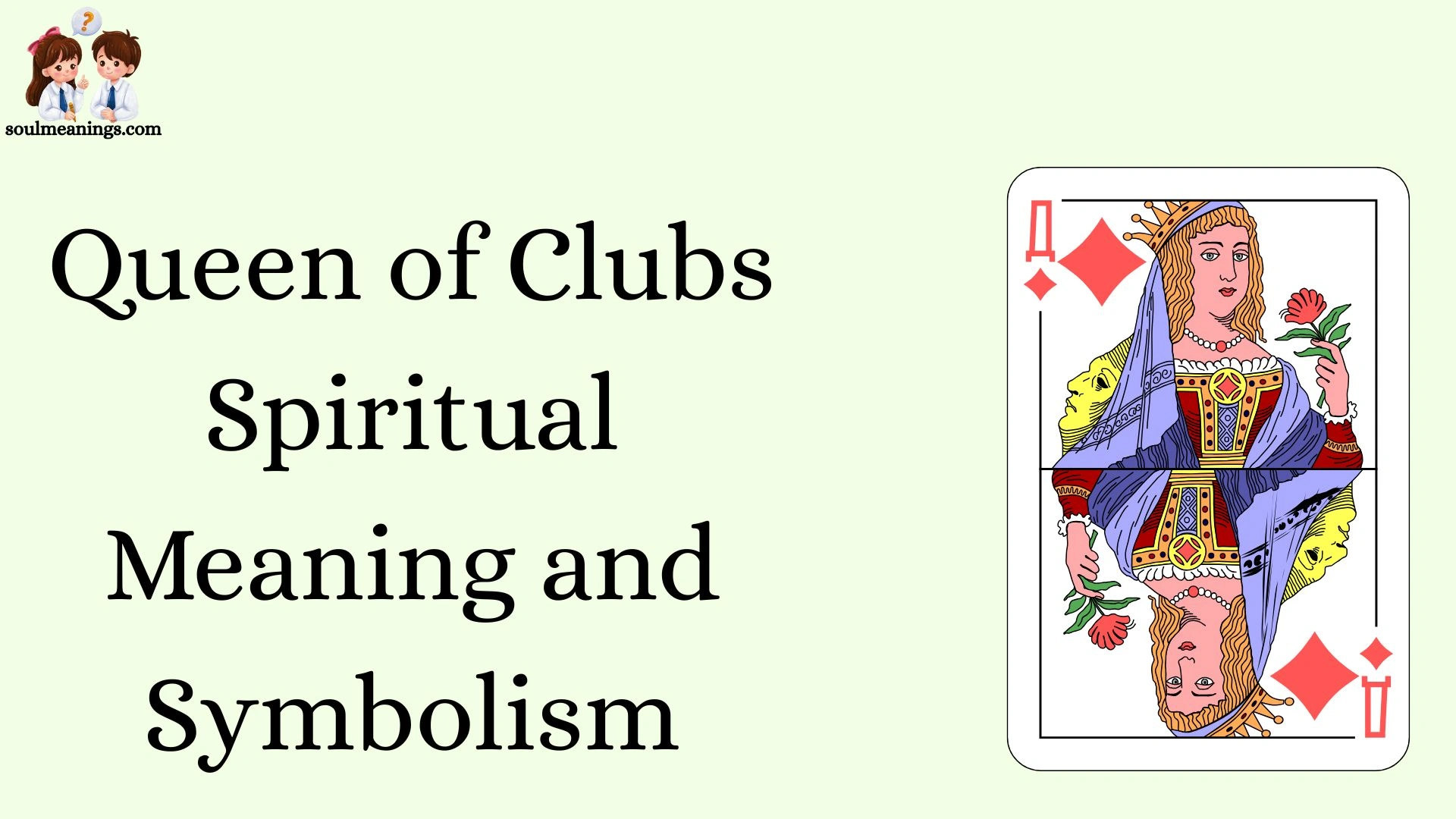
The Queen of Clubs is one of the face cards in a standard deck of playing cards. Traditionally, it shows a royal woman holding a flower, scepter, or symbolic object. The black club suit usually resembles a three-leaf clover.
In modern American culture, the card often represents a clever, charismatic, or spiritually aware woman. However, the meaning depends heavily on context. In games, it’s simply a card. In symbolism, it becomes much deeper.
Why the Clubs Suit Matters
The clubs suit carries strong symbolic meaning by itself. Historically, clubs represented growth, action, work, and movement. Because the Queen belongs to this suit, her symbolism blends intelligence with practical strength.
People often associate clubs with:
• Mental power and strategy
• Personal growth through challenges
• Leadership and determination
• Creative problem-solving
• Social confidence and charisma
• Action instead of passivity
Historical Origins of the Queen of Clubs
Early European Playing Cards
Playing cards likely entered Europe during the late medieval period. Historians believe card systems traveled from Asia and the Islamic world into Italy, Spain, and France.
French card makers later created the suits recognized today:
• Hearts
• Diamonds
• Spades
• Clubs
The Queen of Clubs emerged from this French system during the 1400s and 1500s. Over time, face cards became linked to personality traits and social roles instead of only gaming functions.
Royal Women as Symbols
Queens in playing cards often represented powerful female archetypes. They symbolized diplomacy, wisdom, emotional influence, and political intelligence.
In earlier European symbolism, queens sometimes reflected:
• Noble leadership
• Protective motherhood
• Courtly intelligence
• Spiritual guidance
• Social influence
• Grace under pressure
Because clubs represented action and growth, the Queen of Clubs gradually became associated with a strong-minded woman capable of solving problems and guiding others.
Ancient and Archetypal Roots
Although the exact Queen of Clubs image is not ancient, its symbolic themes are older than playing cards themselves. Many cultures created female wisdom archetypes long before cards existed.
For example:
• Ancient Greek traditions honored wise goddesses like Athena
• Celtic symbolism connected women with intuition and sovereignty
• Egyptian mythology praised feminine spiritual power
• Medieval folklore linked queens with hidden knowledge
Today, many spiritual readers connect the Queen of Clubs to these broader archetypal traditions.
Queen of Clubs Spiritual Meaning
Wisdom and Inner Knowledge
Spiritually, the Queen of Clubs often symbolizes someone who trusts intuition while staying practical. Unlike dreamier symbols, this queen balances emotion with action.
People frequently view the card as a sign of:
• Mature judgment
• Emotional intelligence
• Spiritual awareness
• Clear communication
• Calm leadership
• Adaptability during change
Feminine Energy and Independence
In modern spirituality, the Queen of Clubs represents empowered feminine energy. Importantly, this meaning applies to all genders. The “queen” symbolizes qualities rather than biological identity.
This energy often includes:
• Independence
• Confidence
• Compassion with boundaries
• Intellectual curiosity
• Creative thinking
• Emotional resilience
Spiritual Transformation
Many spiritual readers interpret the card as a transformation symbol. It may appear during periods of growth, healing, or self-discovery.
Because clubs connect with movement and progress, the Queen of Clubs can suggest learning through experience instead of fantasy.
Queen of Clubs Meaning in American Culture
Symbolism in the USA
In the United States, playing cards became cultural icons during the 1800s and 1900s. Gambling halls, riverboats, military games, and family card nights all helped cards gain symbolic importance.
Today, Americans often connect the Queen of Clubs with:
| Context | Meaning in the USA | Common Associations | Notes |
| Spiritual readings | Intuition and confidence | Self-growth | Popular online |
| Tattoo culture | Independence | Strength and mystery | Often black ink |
| Pop culture | Clever female character | Strategy and charm | Seen in films |
| Card games | Skill and luck | Competition | Traditional use |
| Social media symbolism | Empowered femininity | Personal identity | Modern reinterpretation |
Hollywood and Media Influence
American movies and television helped romanticize playing cards. Queens especially became symbols of seduction, mystery, or intelligence.
The Queen of Clubs sometimes appears as:
• The clever strategist
• The emotionally strong woman
• The independent outsider
• The mysterious guide
• The confident leader
• The spiritual seeker
Because of media influence, many younger Americans now see the card as an aesthetic symbol as much as a spiritual one.
Queen of Clubs in Cartomancy and Fortune-Telling
What Is Cartomancy?
Cartomancy is fortune-telling using standard playing cards. This practice became especially popular in Europe and later spread to America.
Unlike tarot decks, cartomancy uses regular playing cards while assigning symbolic meanings to each card.
Common Interpretations
In many cartomancy traditions, the Queen of Clubs represents a person who is intelligent, energetic, and socially influential.
Depending on the reading, it may symbolize:
• A wise female mentor
• Strong communication skills
• Emotional maturity
• Leadership during challenges
• Protective energy
• Creative ambition
Positive and Negative Readings
Not every interpretation is fully positive. Some readings describe the Queen of Clubs as overly controlling or emotionally guarded.
Modern readers usually stress balance instead of extremes.
Emotional and Psychological Symbolism
What the Card Signals Emotionally
Psychologically, the Queen of Clubs often reflects emotional control mixed with inner confidence. Many people see it as the symbol of someone who overcame hardship without losing compassion.
This symbolism resonates strongly in modern American self-help culture.
Common Emotional Associations
The card is often connected to feelings like:
• Confidence after struggle
• Emotional balance
• Personal independence
• Calm authority
• Protective instincts
• Mental sharpness
Identity and Self-Image
Today, many people use symbolic cards to express personality traits online. The Queen of Clubs sometimes represents someone who values wisdom over popularity.
Because of that, the card became connected with authenticity and self-awareness.
Queen of Clubs in Tattoos and Fashion
Tattoo Symbolism
Playing card tattoos remain extremely popular across the United States. The Queen of Clubs stands out because it combines elegance with mystery.
Tattoo meanings often include:
• Inner strength
• Survival after hardship
• Feminine resilience
• Strategic thinking
• Loyalty and confidence
• Personal transformation
Fashion and Aesthetic Trends
Social media platforms helped revive vintage card imagery. Today, the Queen of Clubs appears on:
• Jewelry
• Graphic shirts
• Gothic fashion
• Spiritual journals
• Home decor
• Phone wallpapers
The black club symbol especially fits minimalist and dark-academic aesthetics.
Cross-Cultural and Spiritual Interpretations
Western Spiritual Traditions
In Western symbolism, queens usually represent emotional intelligence and mature guidance. Clubs add action-oriented energy.
Some spiritual readers compare the Queen of Clubs to:
• The Wise Woman archetype
• The Mentor figure
• The Independent Creator
• The Spiritual Protector
Connections to Tarot
Although the Queen of Clubs is not a tarot card, people often compare it to tarot queens. Some see similarities with the Queen of Wands because both represent charisma and confidence.
However, tarot systems vary widely between traditions.
Broader Cultural Meanings
Different cultures may interpret female royal symbols differently. Therefore, meanings can shift depending on spiritual background and historical tradition.
Still, common themes appear repeatedly:
• Wisdom
• Leadership
• Emotional power
• Guidance
• Growth through experience
The Queen of Clubs and Feminine Archetypes
The Wise Queen Symbol
Throughout history, queens symbolized more than beauty or royalty. They often represented strategic intelligence and social influence.
The Queen of Clubs especially reflects active wisdom instead of passive elegance.
Archetypes Linked to the Card
Many readers connect the card with classic archetypes:
• The Protector
• The Counselor
• The Strategist
• The Independent Woman
• The Survivor
• The Visionary Leader
Why Americans Relate to This Symbol
American culture often celebrates independence and self-made confidence. Because of that, the Queen of Clubs fits modern ideals of resilience and empowerment.
Its symbolism feels both vintage and contemporary at the same time.
Modern Digital Symbolism and Social Media
Online Spiritual Communities
The rise of spiritual TikTok, YouTube, and Instagram changed how people discuss card symbolism. The Queen of Clubs now appears frequently in aesthetic edits and inspirational content.
Many creators connect it with:
• “Main character” confidence
• Spiritual awakening
• Emotional intelligence
• Strong boundaries
• Quiet power
• Authentic self-expression
Meme Culture and Identity
Interestingly, playing cards also entered meme culture. People sometimes jokingly assign themselves a “queen card” personality.
However, deeper spiritual meanings still remain popular among readers and symbolism enthusiasts.
Misunderstandings and Controversies
Not All Meanings Are Universal
One major misunderstanding is assuming every spiritual tradition agrees about the Queen of Clubs. In reality, interpretations vary greatly.
Some systems focus on personality. Others focus on luck, relationships, or spiritual lessons.
Gambling Associations
Because playing cards connect with gambling, some religious groups historically viewed them negatively. Certain communities associated cards with temptation or distraction.
However, many modern Americans separate symbolic interpretations from gambling culture.
Internet Over-Simplification
Social media sometimes reduces complex symbolism into one-line meanings. While catchy, those interpretations can ignore historical depth and cultural variation.
The Queen of Clubs carries layered meanings that evolved over centuries.
How the Symbol Changed Over Time
From Game Piece to Spiritual Symbol
Originally, the Queen of Clubs functioned mainly as a gaming card. Over centuries, people added emotional, mystical, and symbolic interpretations.
This shift reflects broader cultural changes.
Revival in Modern Spirituality
During the late 20th and early 21st centuries, interest in symbolism and spirituality grew online. As a result, older symbols gained new life.
The Queen of Clubs became linked to:
• Personal empowerment
• Feminine leadership
• Healing journeys
• Emotional wisdom
• Spiritual independence
Future Interpretations
Meanings will likely continue evolving. Younger generations often reinterpret symbols through identity, creativity, and digital culture.
Even so, the core themes of wisdom and resilience remain remarkably consistent.
FAQs
What does the Queen of Clubs symbolize spiritually?
The Queen of Clubs usually symbolizes wisdom, intuition, confidence, and emotional resilience. Many people also connect it with feminine leadership and personal transformation.
Is the Queen of Clubs a good card?
Most traditions view it positively. However, some readings warn against becoming emotionally distant or overly controlling.
What does the clubs suit mean spiritually?
The clubs suit often represents growth, action, creativity, and mental strength. It’s commonly linked to ambition and progress.
Is the Queen of Clubs connected to tarot?
Not directly, but many readers compare it to tarot queens, especially fiery and confident archetypes. Both systems share symbolic themes.
Why do people tattoo the Queen of Clubs?
People often choose it to represent independence, survival, wisdom, or confidence. It also has a visually striking design.
Does the Queen of Clubs symbolize a real person?
In some fortune-telling traditions, yes. It may represent a mature, intelligent, or influential person in someone’s life.
Conclusion
The Queen of Clubs Spiritual Meaning and Symbolism blends wisdom, confidence, intuition, and resilience into one powerful image. Although it began as a simple playing card, centuries of history transformed it into a meaningful cultural and spiritual symbol.
In the United States, the card now appears in spirituality, fashion, tattoos, social media, and personal identity. Its meaning continues evolving, yet its core themes remain stable: intelligence, emotional strength, and growth through experience.
For many people, the Queen of Clubs represents the idea that true power comes from balance — thinking clearly, acting wisely, and staying grounded during change.