
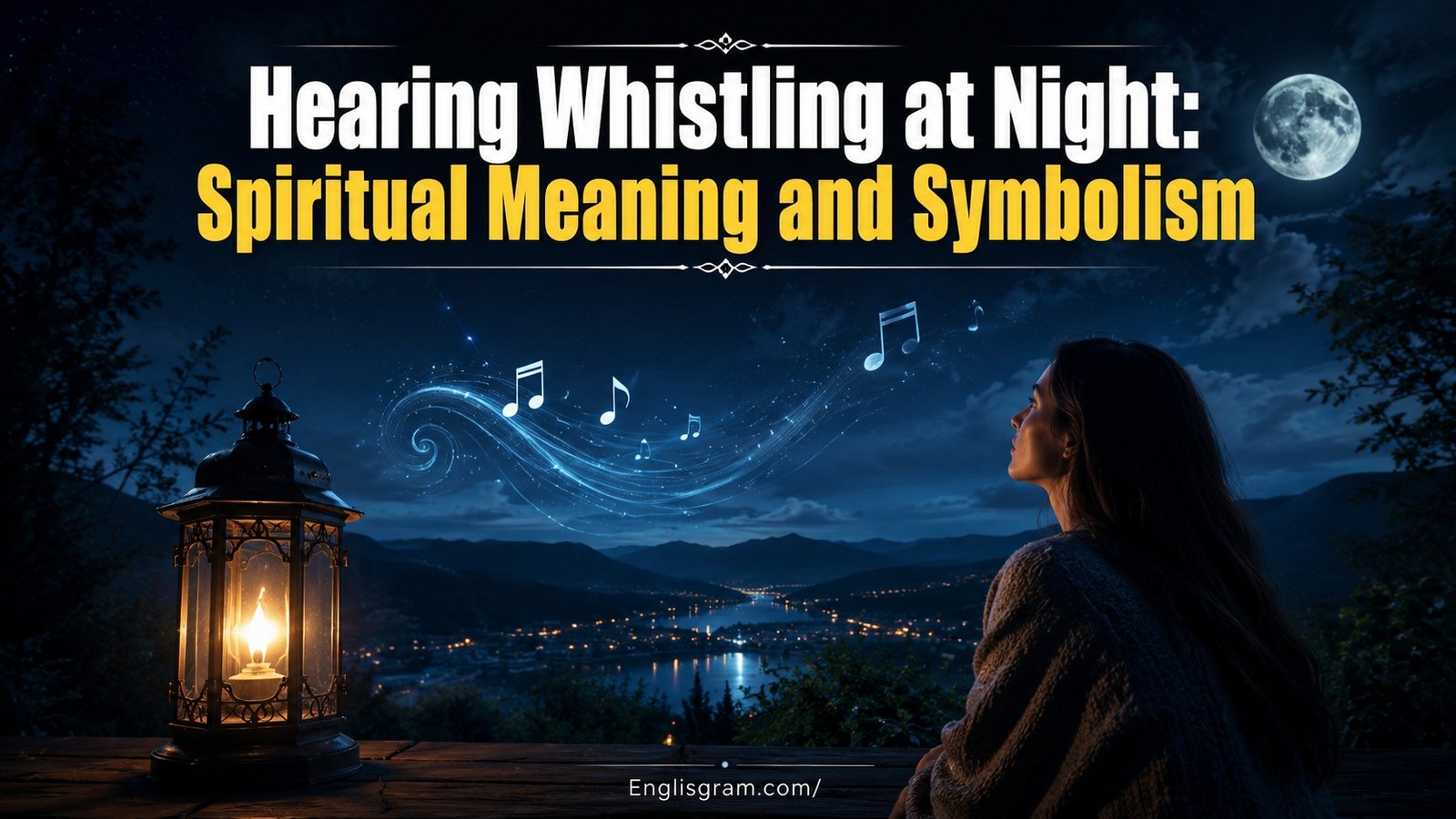
Hearing Whistling at Night may feel mysterious after dark, but wind, wildlife, nearby activity, or spiritual beliefs can shape its meaning. A faint whistle or sound from outside may have a clear source, yet spiritual meaning and symbolism can lead some people to consider a deeper message related to spirituality, personal growth, trust, intuition, change, awareness, and spiritual reflection.
In the United States, beliefs, personal beliefs, cultural traditions, and folklore may give nighttime whistling a special symbol or reminder, although there is no single universal meaning. Personal experience, circumstances, and the surrounding environment can influence how the sound is understood.
It is also useful to consider ordinary environmental sounds, including wind, wildlife, and nearby activity, before assigning a spiritual interpretation. Seasonal change, winter, months, and colder weather have long supported storytelling, sharing, scary stories, and winter storytelling, with people staying inside, gathered together, and passing down traditions.
Quick Answer
Hearing Whistling at Night: Spiritual Meaning and Symbolism is often connected to intuition, spiritual messages, warning signs, or emotional awakening in modern American belief systems. While some people see nighttime whistling as a sign of guidance or heightened awareness, others associate it with mystery, folklore, or supernatural energy.
TL;DR
• Nighttime whistling often symbolizes intuition and spiritual awareness.
• Many American beliefs connect it with mystery and emotional reflection.
• Some cultures treat whistling at night as bad luck or a warning.
• Modern spirituality links repeated sounds to inner transformation.
• Horror media strengthened the eerie reputation of nighttime whistles.
• Meanings depend heavily on personal feelings and cultural background.
What Does Hearing Whistling at Night Mean?
Nighttime whistling feels powerful because sound travels differently after dark. The silence of the night makes even soft noises seem important. For many Americans, hearing a whistle at night creates an immediate emotional response.
A Symbol of Attention and Awareness
In spiritual discussions, whistling often symbolizes attention. It may feel like something is trying to draw your focus toward a hidden issue or emotional truth.
• A reminder to trust your instincts
• A signal to slow down emotionally
• Awareness of hidden tension nearby
• Feeling spiritually or emotionally alert
• A sense of mystery entering daily life
Why Night Sounds Feel More Spiritual
Darkness naturally increases emotional sensitivity. People often become more reflective at night, especially during stress, grief, or life changes.
Because of this, ordinary sounds may feel symbolic. A whistle can become emotionally meaningful when heard during moments of loneliness, uncertainty, or transition.
Historical Beliefs About Whistling at Night
Many beliefs about nighttime whistling are ancient. Long before modern cities, people relied heavily on sound to detect danger after dark. As a result, unusual nighttime noises gained spiritual meaning.
Ancient and Folk Traditions
Several older traditions warned against whistling after sunset. These beliefs appeared in Europe, Asia, Latin America, and Indigenous storytelling traditions.
• Calling spirits accidentally through whistling
• Inviting bad luck into the home
• Attracting wandering supernatural beings
• Breaking nighttime silence considered sacred
• Disturbing protective household spirits
American Folk Influence
The United States inherited many nighttime superstitions from immigrant traditions. Appalachian folklore, Southern ghost stories, and rural oral traditions helped spread caution around nighttime whistles.
Even today, many families pass down sayings like “don’t whistle after dark” without fully knowing the original reason.
Spiritual Meaning of Hearing Whistling at Night
Modern spiritual interpretations focus less on fear and more on awareness. Many people now see mysterious nighttime sounds as symbolic rather than dangerous.
Intuition and Inner Guidance
Some spiritual communities believe nighttime whistles appear during periods of emotional growth. The sound may symbolize intuition trying to rise above mental noise.
• Emotional awakening or self-discovery
• Spiritual guidance during uncertainty
• Messages connected to personal change
• Increased sensitivity to surroundings
• A call to pay attention inwardly
Energy Shifts and Emotional Transitions
People often report strange nighttime experiences during stressful life events. Divorce, grief, career changes, or emotional healing can heighten symbolic thinking.
Because whistling cuts sharply through silence, it becomes linked with moments that “break through” emotional confusion.
Spiritual vs. Literal Meaning
Not every nighttime whistle has symbolic importance. Wind, birds, pipes, or distant people can create unexpected sounds. However, many people become interested in symbolism when the experience feels emotionally charged or repeated.
Hearing Whistling at Night in American Culture
In the USA, nighttime whistling carries mixed meanings. Some Americans see it as playful or harmless. Others immediately associate it with danger or paranormal stories.
Horror Movies and Media Influence
American horror films strongly shaped modern reactions to whistling at night. Slow whistles in dark scenes often signal danger or suspense.
Because of this, people may emotionally react before logically understanding the sound.
| Context | Meaning in the USA | Common Associations | Notes |
| Horror films | Danger or suspense | Fear, tension | Very common modern influence |
| Spiritual communities | Intuition or messages | Awakening, energy | Popular online interpretation |
| Rural folklore | Warning sign | Ghost stories, caution | Strong in older traditions |
| Everyday life | Loneliness or mystery | Reflection, curiosity | Often emotional rather than spiritual |
| Social media trends | Paranormal storytelling | Viral mystery content | Increased since 2020s |
Urban Legends and Paranormal Stories
Online storytelling revived many old beliefs. TikTok videos, podcasts, and paranormal forums frequently discuss mysterious whistles heard outdoors at night.
These stories often blend folklore, spirituality, and entertainment. However, they still shape public perception in the United States.
Cross-Cultural Beliefs About Night Whistling
Different cultures interpret nighttime whistling in unique ways. While meanings vary, many traditions treat it seriously.
Asian Traditions
In parts of East Asia, whistling at night is sometimes believed to attract spirits or unwanted energy. Parents often warn children against doing it after dark.
Latin American Folklore
Some Latin American stories connect nighttime whistling with wandering spirits or supernatural figures. These tales are often shared to teach caution and respect for nighttime spaces.
Indigenous Symbolism
Certain Indigenous traditions treat nighttime sounds as spiritually important. However, interpretations differ greatly among tribes and communities. Respectful understanding requires avoiding oversimplified assumptions.
Read More: Symbols and Spiritual Meaning of Black and White Feathers
Psychological Meaning of Hearing Whistling at Night
Not all interpretations are spiritual. Psychology also explains why nighttime sounds feel emotionally powerful.
Heightened Awareness at Night
Humans naturally become more alert in darkness. The brain reacts strongly to unexpected sounds because nighttime once carried greater survival risks.
• Increased emotional sensitivity after sunset
• Stronger focus on unfamiliar noises
• Anxiety amplifying ordinary sounds
• Isolation creating symbolic thinking
• Quiet environments sharpening attention
Emotional Projection
People often project emotions onto unexplained experiences. A whistle may feel comforting, eerie, lonely, or meaningful depending on a person’s emotional state.
Someone grieving may interpret the sound differently than someone watching a horror movie alone.
Is Hearing Whistling at Night a Warning?
Many people wonder whether nighttime whistles are signs of danger. Historically, warning interpretations are common.
Traditional Warning Symbolism
Older beliefs sometimes viewed nighttime whistles as cautionary signs.
• Hidden danger nearby
• Emotional imbalance or stress
• Untrustworthy influences around you
• A need for greater awareness
• Ignoring personal intuition
Modern Interpretation
Today, most spiritual writers interpret these experiences symbolically rather than literally. Instead of predicting danger, the whistle may represent unresolved emotions or heightened awareness.
It’s usually viewed as reflective, not prophetic.
Hearing Whistling at Night and Paranormal Beliefs
Paranormal communities often connect unexplained whistling with unseen entities or supernatural activity. However, interpretations differ widely.
Why Whistling Appears in Ghost Stories
Whistling creates tension because it sounds human yet distant. It feels personal while remaining hard to locate.
This uncertainty makes it perfect for ghost stories and urban legends.
Internet Influence on Paranormal Symbolism
Modern internet culture amplified these ideas dramatically. Viral videos and online storytelling now spread folklore faster than ever before.
• Haunted woods and whistling stories
• Abandoned places linked with strange sounds
• Paranormal investigation videos online
• Digital folklore communities growing rapidly
• Horror games using whistles symbolically
Symbolism of Whistling in Dreams and Spiritual Practices
Dreams involving whistles often carry emotional symbolism. Spiritual practitioners sometimes connect whistles with messages, transitions, or attention.
Common Dream Meanings
A whistle in dreams may symbolize interruption, warning, or awakening.
• A sudden realization approaching
• Fear of missing important signals
• Desire for guidance or clarity
• Emotional memories resurfacing
• Inner conflict demanding attention
Meditation and Spiritual Reflection
Some people use sound-focused meditation to explore emotions. In these settings, whistles may symbolize mental interruption or spiritual calling.
Interpretations remain highly personal.
Modern Uses of Night Whistling Symbolism
Nighttime whistle symbolism now appears across entertainment, fashion, and online identity.
Social Media and Aesthetic Culture
Dark, mysterious aesthetics became popular online during the 2020s. Sounds like whistles often appear in horror edits, paranormal content, and atmospheric videos.
Tattoos and Artistic Symbolism
Some people use whistles or nighttime imagery symbolically in tattoos and artwork.
• Independence and self-reliance
• Mystery and hidden emotions
• Survival through difficult periods
• Attraction to the unknown
• Personal transformation journeys
Misunderstandings and Controversies
Nighttime whistling beliefs can become exaggerated online. Some creators present folklore as unquestionable truth rather than cultural storytelling.
Fear-Based Interpretations
Extreme paranormal claims sometimes encourage unnecessary fear. However, many traditions originally used these stories as cautionary folklore rather than literal warnings.
Respecting Cultural Traditions
It’s important not to mock or oversimplify spiritual beliefs. At the same time, cultural stories should not be treated as universal facts.
Balanced understanding helps preserve respect while avoiding misinformation.
How Meanings Have Changed Over Time
The symbolism of nighttime whistling evolved greatly over centuries.
Older Meanings
Historically, nighttime whistles often symbolized danger, spirits, or bad luck. People living in isolated areas depended heavily on nighttime awareness.
Modern Meanings
Today, interpretations are usually psychological or spiritual instead of supernatural.
• Emotional awakening rather than curses
• Intuition instead of literal omens
• Atmospheric mystery over strict superstition
• Personal symbolism replacing shared folklore
• Online storytelling shaping modern beliefs
Why People Feel Drawn to Nighttime Symbolism
Humans naturally search for meaning in unexplained experiences. Nighttime especially encourages imagination and emotional reflection.
The Power of Mystery
A distant whistle feels unresolved. Because people cannot always identify the source immediately, the mind fills the gap with symbolism.
Emotional Connection
Nighttime experiences often happen during quiet, vulnerable moments. This emotional setting makes ordinary sounds feel deeply personal and memorable.
FAQs
Is hearing whistling at night spiritually significant?
Many people believe it can symbolize intuition, emotional awareness, or spiritual reflection. However, meanings vary by culture and personal belief.
Why do some cultures warn against whistling at night?
Older traditions often connected nighttime whistles with spirits, bad luck, or danger. These beliefs usually came from folklore and oral storytelling.
Does hearing whistling at night mean something bad?
Not necessarily. Modern interpretations often focus on awareness, emotional transition, or mystery instead of danger.
What does whistling symbolize emotionally?
Whistling can symbolize loneliness, freedom, attention, warning, or curiosity. Context strongly affects emotional meaning.
Why is whistling used in horror movies?
Whistling sounds human yet distant, which creates tension and uncertainty. Filmmakers use it to build suspense and fear.
Can nighttime whistles have a psychological explanation?
Yes. Darkness increases sensitivity to sound and emotion. Anxiety, memory, or heightened awareness can make ordinary sounds feel symbolic.
Conclusion
Hearing Whistling at Night: Spiritual Meaning and Symbolism remains powerful because it combines mystery, emotion, and imagination. Across history, people have connected nighttime whistles with warnings, intuition, spirits, and personal reflection.
In the United States today, these meanings continue evolving through media, spirituality, folklore, and internet culture. Some people see nighttime whistles as emotional symbols, while others simply enjoy the mystery surrounding them.
Ultimately, the meaning often depends on personal experience and cultural background. Whether viewed spiritually, psychologically, or symbolically, nighttime whistling continues to capture human curiosity in a deeply emotional way.





1 thought on “Hearing Whistling at Night: Spiritual Meaning and Symbolism”