
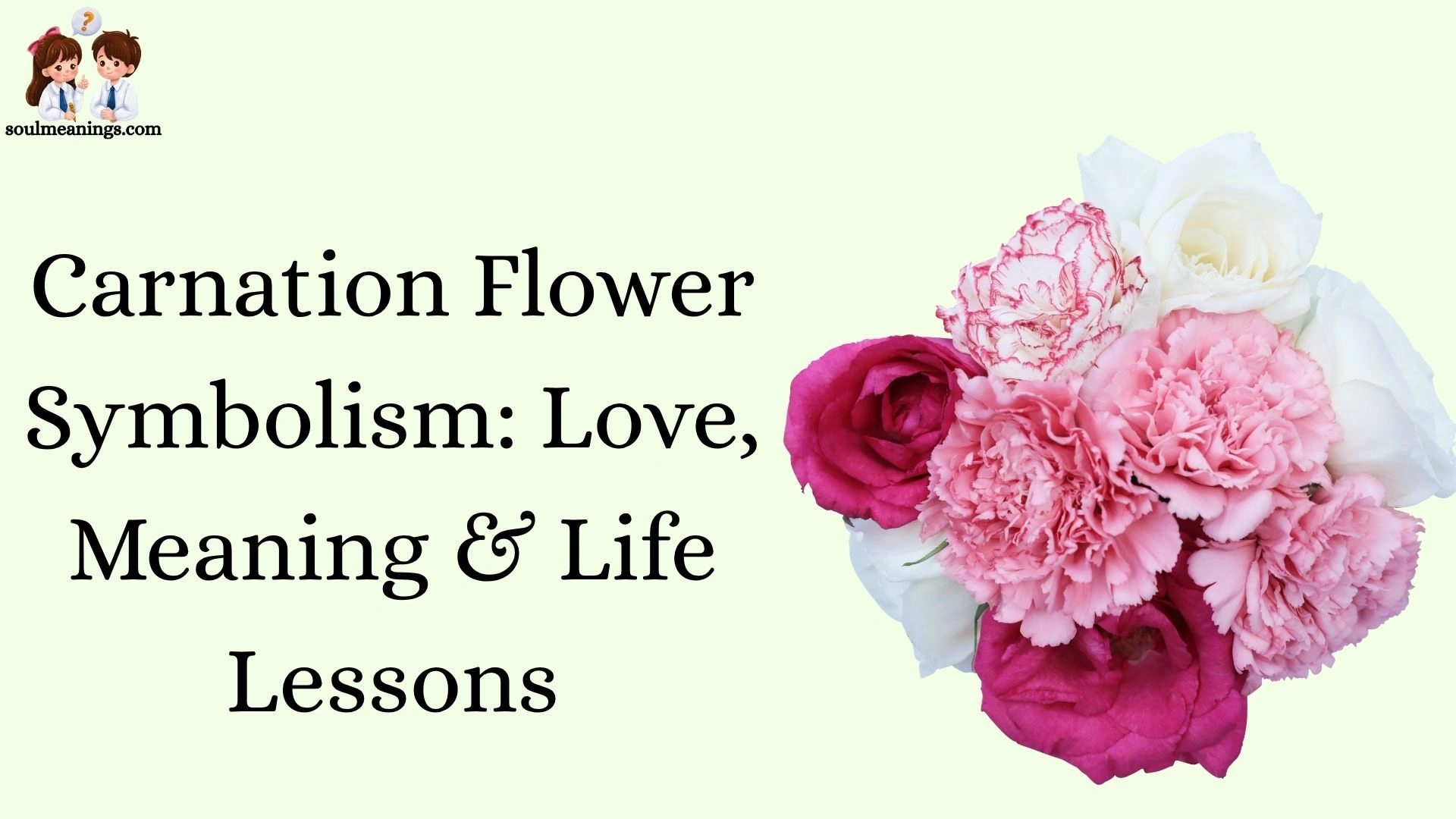
Carnations are one of those flowers you’ve probably seen everywhere—bouquets, holidays, and even school events. Yet behind their soft, ruffled petals lies a surprisingly deep story. Carnation Flower Symbolism: Love, Spiritual Meaning & Life Lessons explores how this simple flower came to represent emotions that are both personal and universal.
In the United States, carnations are tied to love, remembrance, and even national traditions. For example, they show up on Mother’s Day and in memorial services. Because of this, their meaning feels both joyful and reflective at the same time.
But carnations didn’t start in modern America. Their symbolism stretches back thousands of years, blending ancient beliefs, religious ideas, and evolving cultural meanings. Today, they still carry emotional weight—whether in a tattoo, a bouquet, or a quiet tribute.
What Is the Carnation Flower and How Does It Look?
Carnations are easily recognized by their layered, ruffled petals and soft texture. Their look feels delicate, yet they’re surprisingly long-lasting flowers. In the USA, that durability adds to their symbolism of enduring love.
Physical Features and Colors
Carnations come in many shades, each carrying its own meaning. The most common include:
• Red carnations symbolize deep love and admiration
• White carnations represent purity and remembrance
• Pink carnations reflect gratitude and motherly love
• Yellow carnations can suggest disappointment or rejection
• Purple carnations often symbolize unpredictability or uniqueness
Because of these variations, carnations are one of the most expressive flowers you can give.
Carnation Flower Meaning at a Glance
At its core, carnation symbolism revolves around emotional connection. However, its meaning changes depending on context.
Core Meanings in the USA
• Love that lasts through time and challenges
• Respect and admiration for others
• Memory and honoring loved ones
• Gratitude, especially toward mothers
These meanings explain why carnations appear in both celebrations and solemn events.
Historical Origins of Carnation Symbolism
Carnations have a long and fascinating past. Their meaning didn’t appear overnight—it grew over centuries.
Ancient Greek and Roman Roots
The name “carnation” likely comes from the Latin word carnis, meaning flesh. This may relate to early pink tones.
In ancient times, carnations were used in ceremonial crowns. They symbolized beauty and divine connection.
Early Religious Associations
Later, carnations became linked with Christian symbolism. Some traditions say pink carnations grew from tears shed by the Virgin Mary.
Because of this, they came to represent unconditional love and sacrifice.
Carnation Symbolism in the United States
Today, carnations hold a special place in American culture. Their meanings are both public and deeply personal.
Cultural and National Significance
Carnations are strongly tied to Mother’s Day in the USA. The tradition began in the early 1900s when white carnations honored mothers who had passed.
Over time, the meanings expanded:
• White carnations: remembrance of mothers
• Pink carnations: appreciation for living mothers
• Red carnations: admiration and affection
Everyday American Use
Carnations are often used in:
• School ceremonies and graduations
• Funerals and memorial services
• Affordable yet meaningful bouquets
• Workplace celebrations and events
Because they’re accessible and meaningful, they’ve become a “universal” emotional flower in the U.S.
Spiritual Meaning of Carnation Flowers
Beyond physical beauty, carnations carry spiritual symbolism. Their layered petals often represent deeper emotional and spiritual truths.
Spiritual Interpretations
• Purity of heart and sincere intention
• Connection between life, death, and memory
• Healing from emotional pain
• Quiet strength during difficult times
In many interpretations, carnations remind people that love doesn’t disappear—it changes form.
Carnation Flower Color Meanings Explained
Color plays a huge role in how carnations are understood. Even a small shift in shade can change the message entirely.
Color Symbolism Breakdown
| Color | Meaning in the USA | Common Associations | Notes |
| Red | Love, admiration | Romance, respect | Strong emotional intensity |
| White | Purity, remembrance | Funerals, memorials | Often used in sympathy |
| Pink | Gratitude, maternal love | Mother’s Day | Warm, gentle emotion |
| Yellow | Disappointment, rejection | Friendship strain | Less commonly gifted |
| Purple | Unpredictability | Creativity, uniqueness | Rare but expressive |
Because of this, choosing the right color matters just as much as the flower itself.
Emotional and Psychological Symbolism
Carnations don’t just look beautiful—they make people feel something. That emotional impact is part of their lasting appeal.
Common Emotional Signals
• Comfort during grief or loss
• Warmth and appreciation in relationships
• Nostalgia tied to memory and family
• Calmness and emotional balance
In psychology, flowers like carnations often act as “emotional shortcuts.” They say what words sometimes can’t.
Carnation Flower Meaning in Love and Relationships
Carnations are often seen as a love flower, but not always in a romantic way. Their meaning is broader and more nuanced.
Love-Related Symbolism
• Romantic love (especially red carnations)
• Family love and devotion
• Friendship and appreciation
• Long-term emotional bonds
Because of this range, carnations are more versatile than roses in many situations.
Carnation Symbolism in Tattoos and Personal Expression
Today, carnations are popular in tattoos and design. People choose them not just for beauty, but for meaning.
Why People Choose Carnation Tattoos
• To honor a loved one who passed
• To symbolize resilience and emotional strength
• To represent motherhood or family
• To express quiet, lasting love
Unlike bold symbols, carnations often reflect subtle and personal stories.
Cross-Cultural Meanings of Carnations
While this article focuses on the USA, carnations also carry meaning worldwide.
Global Symbolism Highlights
• In parts of Europe, carnations symbolize fascination and distinction
• In some Asian cultures, they represent admiration and good luck
• In Mediterranean traditions, they’re tied to celebration and life
Despite differences, one theme remains: carnations are deeply emotional flowers.
Misunderstandings and Negative Meanings
Not all carnation meanings are positive. Some interpretations can feel surprising.
Common Misinterpretations
• Yellow carnations can signal rejection or disappointment
• Overuse in funerals may link them only with sadness
• Some see them as “cheap” due to affordability
However, these views don’t erase their deeper symbolism. Instead, they show how meaning can shift based on context.
How Carnation Symbolism Has Changed Over Time
Carnations have evolved from ancient ritual flowers to modern emotional symbols.
Key Shifts
• Ancient times: beauty and divine connection
• Religious era: purity and sacrifice
• Early America: motherhood and remembrance
• Modern day: versatile symbol of love and emotion
Today, carnations feel both traditional and modern at the same time.
Carnations in Holidays, Media, and Everyday Life
Carnations appear more often than people realize. They quietly shape emotional moments.
Where You’ll See Carnations
• Mother’s Day bouquets
• Funeral arrangements
• School dances and corsages
• Social media posts about love and memory
Because of this visibility, their symbolism stays alive across generations.
FAQs
What does a carnation flower symbolize?
Carnations symbolize love, admiration, and remembrance. In the USA, they often represent family bonds and emotional connection.
What do different carnation colors mean?
Each color has a unique meaning. For example, red shows love, white represents remembrance, and pink expresses gratitude.
Are carnations romantic flowers?
Yes, but not only romantic. They also symbolize family love, friendship, and long-term emotional bonds.
Why are carnations used for Mother’s Day?
They were chosen to honor mothers because of their lasting beauty and association with pure love.
Do carnations have spiritual meaning?
Yes. They often represent purity, emotional healing, and the connection between life and memory.
Conclusion
Carnations may seem simple at first glance, but their meaning runs deep. From ancient rituals to modern American traditions, they’ve carried messages of love, memory, and emotional strength across generations. That’s why Carnation Flower Symbolism: Love, Spiritual Meaning & Life Lessons continues to resonate today.
In the United States, carnations balance joy and reflection. They celebrate life while honoring the past. Whether given as a gift, worn, or remembered in quiet moments, they remind us that emotions—like flowers—can be both delicate and enduring.