Symbolism and allegory are two powerful tools used in storytelling, art, and everyday language. While they often overlap, they are not the same thing. Many readers in the United States encounter both concepts in school, books, films, and even social media—but the distinction can feel unclear.
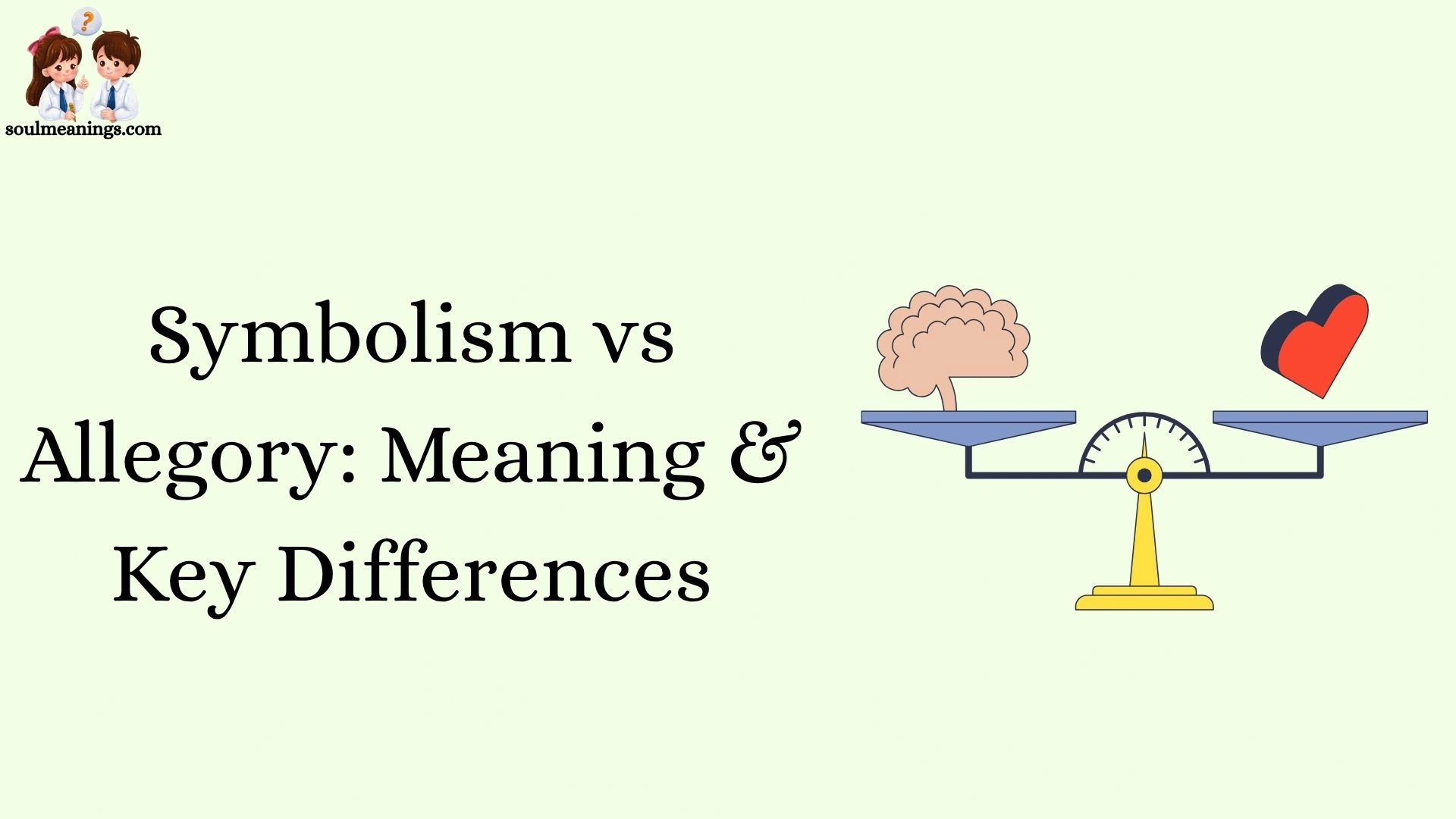
At its core, Symbolism vs Allegory | Differences, Meaning & Literary Insights is about how meaning is communicated. Symbolism tends to hint at deeper ideas through individual elements. Allegory, on the other hand, builds an entire story around a hidden message.
Understanding the difference helps you read more deeply, interpret culture more clearly, and even express your own ideas with greater impact.
What Is Symbolism vs Allegory?
Understanding this comparison starts with clear definitions. Although both deal with hidden meaning, they function differently in how they communicate ideas.
Symbolism Explained
Symbolism uses one object, image, or action to represent something deeper.
For example, a rose might symbolize love. However, it doesn’t control the entire story—it’s just one element within it.
• A heart shape represents love or emotion
• A storm can symbolize conflict or chaos
• Light often stands for hope or truth
• A broken mirror may suggest bad luck or loss
Symbolism is flexible. The same symbol can mean different things depending on context.
Allegory Explained
Allegory is a complete narrative where characters, events, and settings all represent deeper meanings.
Instead of one symbol, the entire story works as a coded message.
• Characters represent real-world ideas or groups
• Events mirror historical or social situations
• Settings often reflect moral or political themes
• The story has a clear underlying message
Unlike symbolism, allegory tends to have a more fixed interpretation.
Key Differences Between Symbolism and Allegory
For American readers, this distinction often comes up in literature classes and media analysis. Seeing the differences clearly helps avoid confusion.
Side-by-Side Comparison
| Feature | Symbolism | Allegory |
| Scope | Single element | Entire story |
| Meaning | Open and flexible | More fixed and direct |
| Usage | Subtle hints | Structured message |
| Interpretation | Multiple meanings possible | Usually one main meaning |
| Example | A dove = peace | A story about war representing politics |
Why This Matters
Understanding the difference changes how you read stories.
• Symbolism invites personal interpretation
• Allegory guides you toward a specific message
• Symbolism enhances emotion and tone
• Allegory delivers moral or political lessons
Historical Origins of Symbolism and Allegory
Both symbolism and allegory have deep roots in human history. Their origins stretch far beyond modern American culture.
Ancient and Classical Roots
Symbolism appeared early in myths, rituals, and art.
Ancient cultures used symbols to represent nature, gods, and life cycles. For example, the sun often symbolized life and power.
Allegory developed strongly in ancient storytelling.
Philosophers and writers used allegory to explain big ideas in simple ways. Stories were easier to understand than abstract theories.
Medieval and Religious Influence
During the Middle Ages, allegory became especially important.
Religious texts often used allegory to teach moral lessons. Every part of the story had meaning.
Symbolism also grew in religious art.
• Colors represented virtues or sins
• Animals symbolized moral traits
• Objects carried spiritual meaning
Symbolism vs Allegory in American Literature
In the United States, both techniques are central to storytelling. They shape how readers interpret meaning in books and beyond.
Common Uses in U.S. Literature
American writers often blend symbolism and allegory.
However, they use them for different purposes.
• Symbolism builds mood and emotional depth
• Allegory delivers social or political critique
• Symbolism allows reader interpretation
• Allegory often reflects real-world issues
Why American Culture Embraces Both
American storytelling values both freedom and clarity.
Symbolism fits creative expression. Allegory fits social commentary.
Because of this, both are widely taught and used across schools, films, and media.
Symbolism in Everyday American Life
Symbolism isn’t limited to books. It appears everywhere in daily life across the United States.
Common Symbolic Examples
People use symbols to express identity, emotion, and beliefs.
• Flags represent national identity
• Colors signal moods or messages
• Emojis convey feelings quickly 😊
• Tattoos reflect personal meaning
Symbolism works because it’s simple and widely understood.
Allegory in Modern Media and Culture
Allegory continues to play a strong role in modern storytelling.
In the U.S., films, shows, and novels often use allegory to discuss complex issues.
Where You See Allegory Today
Allegory is especially useful for sensitive topics.
• Stories about fictional worlds reflect real politics
• Characters represent social groups or ideas
• Plots mirror historical events
• Themes explore justice, power, and identity
Because of this, allegory remains a powerful communication tool.
Emotional and Psychological Meaning
Both symbolism and allegory connect deeply with human emotions.
However, they do so in slightly different ways.
Symbolism and Emotion
Symbolism works on a personal level.
It triggers feelings and associations without explaining them directly.
• A sunset may evoke peace or endings
• Rain might suggest sadness or renewal
• Fire can represent passion or destruction
Allegory and Thought
Allegory engages the mind more directly.
It encourages reflection and understanding.
• Readers analyze meaning behind the story
• Messages often relate to real-life issues
• Emotions are tied to interpretation
Cross-Cultural Perspectives
Although this article focuses on the USA, symbolism and allegory exist worldwide.
Different cultures use them in unique ways.
Shared Global Patterns
Across cultures, these tools help explain complex ideas.
• Symbols often connect to nature and spirituality
• Allegories teach moral or philosophical lessons
• Meanings may vary by region or tradition
• Stories often reflect cultural values
Despite differences, the core purpose remains similar.
Modern Usage: Tattoos, Social Media, and Identity
Today, symbolism and allegory shape how people express themselves online and offline.
Symbolism in Personal Expression
Symbolism is especially popular in modern identity.
• Tattoos carry personal or emotional meaning
• Jewelry uses symbolic shapes and icons
• Social media posts include symbolic imagery
• Fashion reflects values through symbols
Allegory in Digital Storytelling
Allegory appears in longer formats.
• Films and series explore deeper themes
• Online stories reflect social issues
• Creative content uses metaphorical narratives
Misunderstandings and Common Confusion
Many people confuse symbolism and allegory because they both involve hidden meaning.
However, the difference is important.
Common Mistakes
Understanding these helps avoid misinterpretation.
• Thinking all symbols are allegories
• Assuming allegories allow multiple meanings
• Over-interpreting simple symbols
• Missing the full message in allegorical stories
Clarity comes from recognizing scale and intent.
Controversies and Misuse
Like many forms of expression, symbolism and allegory can be misunderstood or misused.
Sensitive and Political Contexts
In the U.S., these tools sometimes appear in debates.
• Symbols may be reinterpreted over time
• Allegories can be seen as political commentary
• Meanings may shift based on social context
• Misuse can lead to confusion or conflict
Because of this, context always matters.
How Meanings Have Shifted Over Time
Both symbolism and allegory have evolved significantly.
What they meant centuries ago may differ today.
Changing Interpretations
Modern audiences often reinterpret older meanings.
• Symbols gain new meanings through culture
• Allegories reflect current social issues
• Media reshapes traditional interpretations
• Personal meaning is more accepted today
This evolution keeps both concepts relevant.
When to Use Symbolism vs Allegory
Knowing when to use each helps writers and creators communicate clearly.
Practical Guidance
Each serves a different purpose.
• Use symbolism for subtle emotional depth
• Use allegory for clear, structured messages
• Combine both for layered storytelling
• Choose based on audience and intent
FAQs
What is the main difference between symbolism and allegory?
Symbolism uses individual elements to suggest meaning, while allegory tells a full story with a hidden message. Symbolism is flexible, but allegory is more structured.
Can a story use both symbolism and allegory?
Yes, many stories combine both. A story may be allegorical overall while still using symbols within it.
Is symbolism always open to interpretation?
Usually, yes. Symbolism allows multiple meanings depending on context and personal perspective.
Why is allegory used in storytelling?
Allegory helps explain complex ideas in a clear, structured way. It’s often used for moral, social, or political messages.
Are symbolism and allegory still relevant today?
Absolutely. Both are widely used in modern media, literature, and everyday communication in the USA.
How can I identify allegory in a story?
Look for patterns where characters and events consistently represent deeper ideas. If everything points to a hidden message, it’s likely allegory.
Conclusion
Understanding Symbolism vs Allegory | Differences, Meaning & Literary Insights opens the door to deeper reading and clearer thinking. While symbolism uses individual elements to suggest meaning, allegory builds entire narratives around hidden messages.
In the United States, both remain essential tools in storytelling, education, and everyday expression. They help people explore emotions, communicate ideas, and reflect on society in meaningful ways.
As culture continues to evolve, so will the ways we use symbolism and allegory. Paying attention to both can help you see not just what a story says—but what it truly means beneath the surface.