Horses Symbolism: Spiritual, Cultural, Biblical, and Modern Meanings explores how horses stir human imagination deeply. In this article, we explore how horses, more than animals, stir the human imagination deeply, from ancient cave paintings to modern equestrian sports. They galloped through history as companions and powerful signs of power. They embody freedom, strength, and loyalty, offering spiritual guidance across cultures worldwide.
In myths, religions, and philosophies, they represent journeys, both physical and inward, teaching resilience, speed, and connection to nature. I have seen how people who admire their beauty or ride for sport feel drawn spiritually to this symbolism. Across different faiths and applications, we dive into mythology, spirituality, dreams, literature, tattoos, weddings, and art, exploring the meaning of colors. In life, the lessons they inspire hold an enduring role in consciousness, offering timeless wisdom that remains meaningful today.
During the Lunar Year of the Horse, that meaning begins to crowd the digital world. On WeChat, Xiaohongshu, and other Chinese-language spaces, along with Facebook and Instagram, blessings and slogans gallop across the screen—victory at first run, 马到成功, ten thousand horses surging forward, 万马奔腾, pressing without pause, 马不停蹄, and wishes of Good fortune, 马年大吉. Animated stickers and memes are shared casually as greetings, while online wordplay gains fresh momentum in the age of short video.
A horse topped with a stack of banknotes promises wealth right away, 马上有钱; one carrying two elephants hints at a relationship, 马上有对象; one bearing a house signals homeownership, 马上有房. On platforms like Douyin, 抖音, and Kuaishou, 快手, this right-away pattern, known as mǎshàng style, 马上体, has drawn millions into playful imitation filled with humor.
Beneath it lives a quiet longing for success to arrive, even arrives now, echoing how horses once carried warriors into battle, pulled kings through crowds, appeared with wings, extra legs, and magical force in legends. In real stories and fairy tales, they inspired courage and adventure; fast, fearless, and connected to humans, racing on racetracks, leaving a mark no symbol can replace.
Quick Answer
Horses Symbolism: Spiritual, Cultural, Biblical, and Modern Meanings most commonly represents freedom, strength, and personal power in the United States. Spiritually, horses often symbolize guidance, movement, and life force energy. Across cultures and religions, they also carry meanings of war, nobility, endurance, and divine connection.
TL;DR
• Horses symbolize freedom and independence in American culture.
• Historically linked to war, royalty, and survival.
• Spiritually connected to power, movement, and intuition.
• In the Bible, horses can symbolize judgment or strength.
• Today, common in tattoos, decor, and identity symbols.
What Do Horses Symbolize?
For many Americans, the horse instantly brings to mind wide landscapes and open skies. However, symbolism depends on context. A wild horse feels different from a war horse or a white horse in a dream.
Core Meanings in the USA
• Freedom and independence
• Physical strength and stamina
• Personal drive and ambition
• Adventure and exploration
• Loyalty and partnership
Because horses helped build early America, their symbolism often blends survival with aspiration. They don’t just represent motion. They represent moving forward in life.
The Physical Symbol: How Horses Appear in Art and Culture
Before diving into deeper meaning, it helps to understand how horses are visually portrayed.
Common Visual Forms
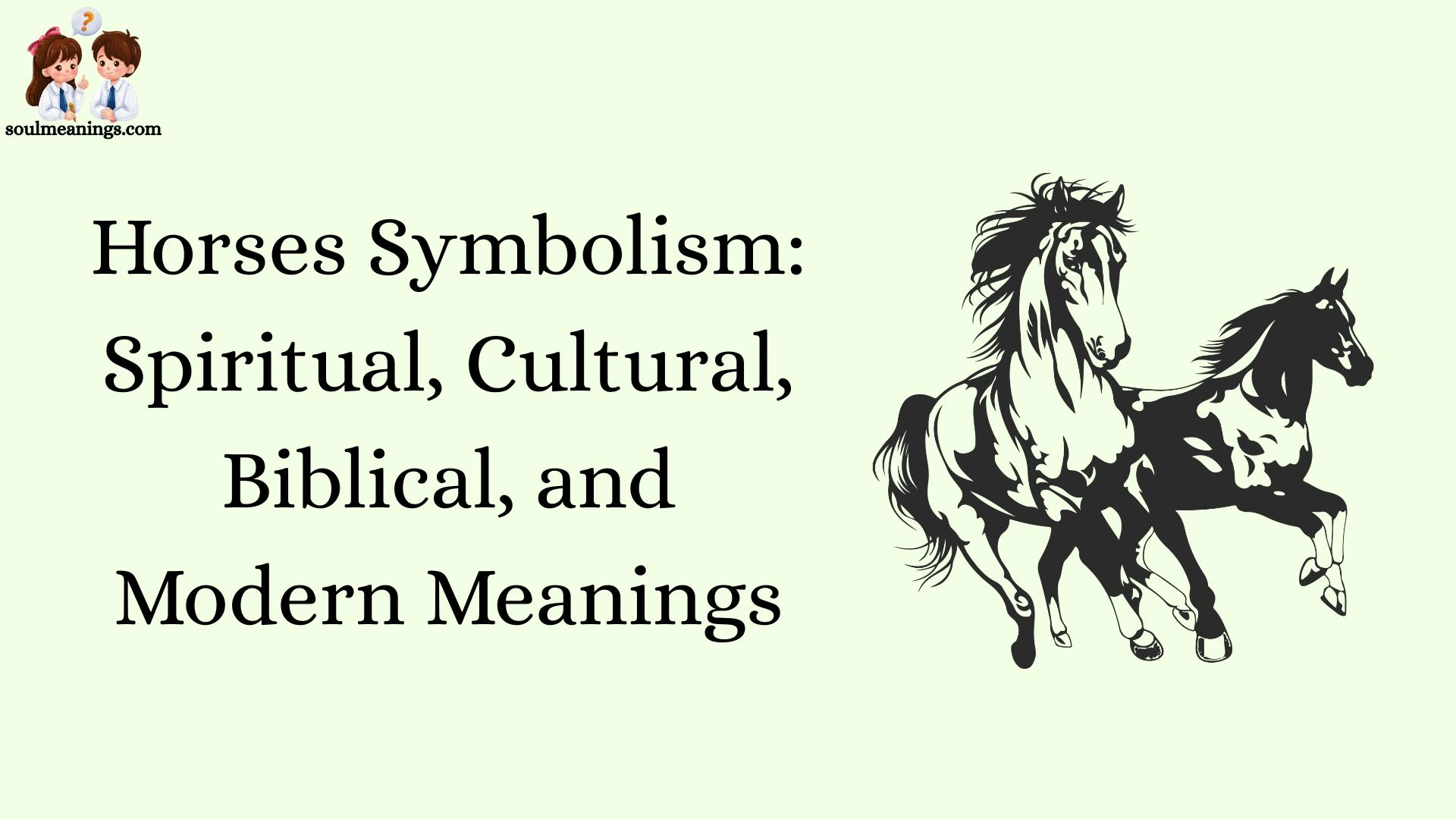
• Wild horse running across open land
• Rearing horse symbolizing power
• White horse linked to purity or heroism
• Black horse associated with mystery
• War horse with armor and rider
In American imagery, the wild mustang is especially powerful. Its flowing mane and untamed spirit often stand for individual freedom. In contrast, a calm horse beside a rider symbolizes partnership and trust.
Color also shifts meaning. For example, white horses often suggest hope or spiritual guidance, while red or fiery horses may suggest passion or conflict.
Ancient and Pre-Christian Roots of Horse Symbolism
Long before America existed, horses held sacred meaning.
Indo-European and Celtic Traditions
In many ancient European cultures, horses were linked to the sun and fertility. The Celtic goddess Epona was a protector of horses and riders. She symbolized abundance and safe journeys.
Horses also appeared in burial rituals. Because they carried warriors in life, they were believed to carry souls in death.
Greek and Roman Mythology
In Greek myth, Poseidon created the horse. The winged horse Pegasus symbolized inspiration and divine creativity.
Meanwhile, Roman cavalry power made the horse a sign of military strength and empire.
Across ancient cultures, horses represented more than transportation. They symbolized divine energy and unstoppable force.
Horse Symbolism in Native American Traditions
In North America, horses arrived with Spanish explorers in the 1500s. However, many Native tribes quickly integrated them into culture and spirituality.
Spiritual and Cultural Meaning
• Freedom across the plains
• Wealth and status
• Spiritual partnership with nature
• Power and mobility in warfare
For Plains tribes especially, horses transformed daily life. They became sacred companions. In some traditions, horses are seen as spiritual messengers or dream guides.
It’s important to approach Native symbolism respectfully. Meanings vary by tribe, and modern Native communities continue to define their own traditions.
Biblical Meaning of Horses
In the Bible, horses often appear in dramatic settings.
Horses in the Old Testament
Horses were symbols of military power. However, prophets sometimes warned against relying too heavily on horses instead of faith.
The Four Horsemen of Revelation
In the New Testament book of Revelation, four horses represent conquest, war, famine, and death. This imagery strongly shaped Western views.
Because of this, horses can sometimes carry intense or apocalyptic meaning in Christian symbolism. Yet in other passages, horses also represent majesty and strength.
So in biblical contexts, the horse can symbolize both power and divine judgment.
What Does a Horse Symbolize in America Today?
In the United States, the horse carries a unique emotional weight.
The Western Frontier Legacy
The American cowboy image plays a major role. Horses symbolize:
• Self-reliance
• Frontier spirit
• Hard work
• Open landscapes
• Rugged independence
Movies and media reinforced this image throughout the 20th century. Even today, rodeos and ranch culture keep the symbolism alive.
Modern American Contexts
| Context | Meaning in the USA | Common Associations | Notes |
| Wild Mustang | Freedom and untamed spirit | Western states, open land | Often tied to identity |
| Racehorse | Speed and ambition | Kentucky Derby, competition | Linked to success drive |
| Police Horse | Authority and calm strength | Public service | Symbol of order |
| Therapy Horse | Healing and trust | Emotional growth | Growing in popularity |
| Military Horse | Honor and sacrifice | Ceremonial units | Historic respect |
Because horses are woven into American history, their symbolism often blends pride with nostalgia.
Spiritual Meaning of Horses
Spiritually, horses are often connected to life force energy. They move powerfully and instinctively.
Common Spiritual Interpretations
• Inner strength awakening
• Personal transformation
• Guided movement through life
• Balance between freedom and discipline
Some people view the horse as a spirit animal. In that framework, it symbolizes drive and intuition.
However, interpretations vary by spiritual path. It’s best seen as symbolic guidance, not literal belief.
Emotional and Psychological Associations
Psychologically, horses often represent the untamed parts of ourselves.
Carl Jung and other thinkers discussed animal archetypes as symbols of instinct. In that view, a horse may represent:
• Passion and desire
• Motivation pushing you forward
• Fear of losing control
• Longing for freedom
For example, dreaming of riding a horse may symbolize feeling in control of your life. Falling off might suggest insecurity.
Because horses are powerful yet sensitive animals, they often reflect emotional balance.
Horse Symbolism in Tattoos and Body Art
Horse tattoos remain popular in the United States in 2025–2026.
Popular Tattoo Themes
• Running horse silhouette
• Tribal-style horse designs
• Winged horse imagery
• Minimalist line-art horse
Most people choose horse tattoos to represent freedom or resilience. Some connect it to personal transformation after hardship.
Placement also matters. Larger back or shoulder designs often emphasize strength, while smaller wrist tattoos may focus on subtle independence.
Horses in Modern Media and Pop Culture
Today, horses still shape imagination.
Films, streaming shows, and video games often use horses to represent heroism or escape. Western dramas keep the symbolism alive.
Social media trends also romanticize “horse girl” identity. That phrase once carried stereotypes. However, many now reclaim it as a badge of passion and dedication.
Equestrian sports, from racing to show jumping, continue to symbolize discipline and elite tradition in American culture.
Misunderstandings and Controversies
Although horse symbolism is largely positive, some issues deserve careful mention.
Historical Complications
• Horses were tools of colonization and warfare
• Wealth tied to horse ownership created class divides
• Overbreeding and racing ethics raise concerns
In addition, biblical imagery like the Four Horsemen can create fear-based associations.
It’s important to separate symbolic meaning from real-world ethical concerns. Appreciating symbolism shouldn’t ignore history.
How Horse Symbolism Has Shifted Over Time
Meaning evolves.
In ancient times, horses symbolized survival and military dominance. During medieval eras, they symbolized nobility.
In 19th-century America, they symbolized frontier expansion. In the 20th century, cars replaced horses, shifting symbolism toward nostalgia.
Today, horses often represent emotional freedom rather than physical travel. They symbolize mindset more than transportation.
FAQs
What does a horse symbolize spiritually?
Spiritually, a horse often symbolizes inner power and forward movement. Many see it as a guide toward freedom and growth.
Is a horse a symbol of good luck?
In some cultures, yes. Especially when paired with a horseshoe, it can represent protection and fortune.
What does a white horse symbolize?
A white horse often symbolizes purity, hope, or divine presence. In American imagery, it can also suggest heroism.
What does dreaming about horses mean?
Dreaming about horses usually connects to control, ambition, or emotional strength. Context matters most.
Are horses a symbol of America?
While not an official national symbol, horses strongly represent the American West and frontier spirit.
Why are horses associated with freedom?
Because they run across open land and once enabled travel across vast spaces. That image became deeply tied to independence.
Conclusion
Across centuries and cultures, horses have carried more than riders. They have carried meaning. From ancient myth to biblical visions to American frontier legends, their symbolism continues to evolve.
Today, Horses Symbolism: Spiritual, Cultural, Biblical, and Modern Meanings still centers on freedom, strength, and personal power. Yet it also reflects deeper emotional themes—control, partnership, ambition, and transformation.
When we see a horse running across an open field, something inside us responds. Maybe it’s history. Maybe it’s instinct. Or maybe it’s the quiet reminder that we, too, are meant to move forward.