Hermetic symbolism refers to a collection of symbols and signs linked to Hermeticism, a spiritual tradition rooted in ancient Egypt, Greece, and later Western esoteric thought. These symbols convey ideas about the cosmos, human consciousness, and the pursuit of hidden knowledge. In the United States today, Hermetic symbols often appear in art, tattoos, literature, and spiritual practices, capturing curiosity about self-transformation, mysticism, and the universe.
Americans encounter Hermetic symbolism in a variety of contexts—from Renaissance-inspired occult books to modern metaphysical communities. Its appeal lies in combining mystery with meaning: each symbol acts as a visual shorthand for philosophical and spiritual principles that transcend everyday life.
Overview of Hermetic Symbolism
Hermetic symbols are visual representations of philosophical and spiritual concepts from Hermeticism. They often include geometric shapes, alchemical elements, and mythological motifs.
Common Symbols
• Ouroboros – the snake eating its tail, symbolizing eternity and cycles.
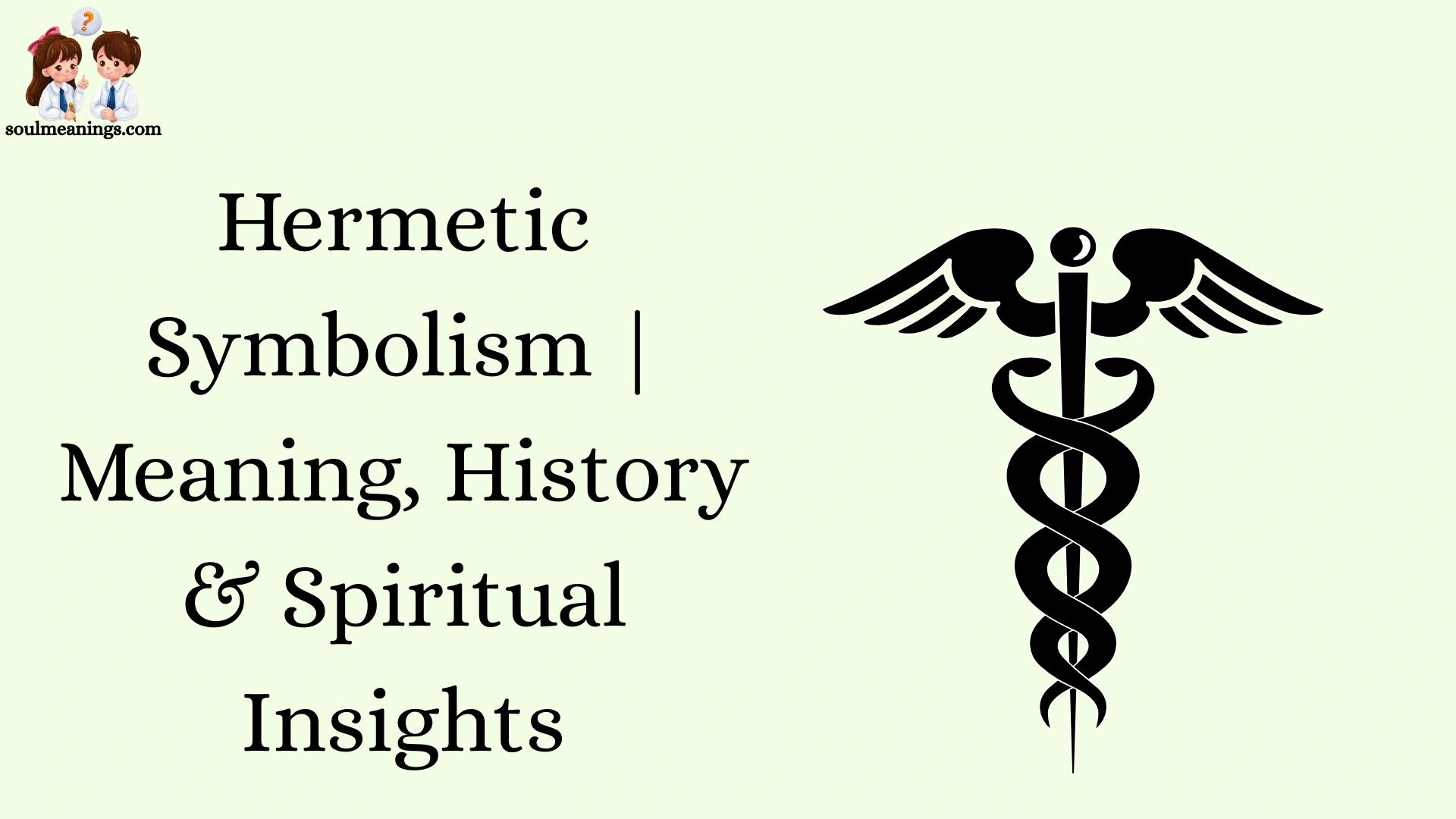
• Caduceus – intertwined serpents on a staff, representing balance and communication.
• Hermetic Seal – often a combination of triangles, circles, and stars.
• Alchemical Symbols – metals, planets, and mystical elements denote transformation.
These symbols frequently use gold, black, and deep blue, conveying wisdom, mystery, and spiritual depth. They appear in texts, artwork, jewelry, tattoos, and digital media.
Historical Background
Hermetic symbolism emerged from Hermeticism, a philosophical and religious system attributed to Hermes Trismegistus, a syncretic figure combining the Greek god Hermes and the Egyptian god Thoth.
Ancient Roots
• Developed in Hellenistic Egypt (c. 2nd–3rd century CE).
• Combined Egyptian religious concepts with Greek philosophy and astrology.
• Early texts (the Corpus Hermeticum) explored cosmology, divinity, and human potential.
Alchemy and Renaissance Influence
• Medieval and Renaissance Europe adopted Hermetic symbols in alchemy, art, and early science.
• Symbols like the ouroboros and planetary metals became shorthand for transformation and universal order.
• The revival of Hermeticism influenced occult societies and esoteric learning in Western culture.
Symbolism in the USA
Hermetic symbols arrived in America with European settlers and the rise of esoteric societies in the 18th and 19th centuries.
Modern American Associations
• Personal growth – many view symbols as guides for inner transformation.
• Art and literature – referenced in novels, movies, and graphic design.
• Occult communities – symbols appear in Tarot, astrology, and metaphysical shops.
• Education and curiosity – sometimes used decoratively or in philosophical contexts.
| Context | Meaning in the USA | Common Associations | Notes |
| Tattoos | Self-transformation, wisdom | Ouroboros, caduceus | Popular in spiritual communities |
| Jewelry & decor | Cosmic balance, protection | Hermetic seal, alchemical icons | Often stylized for aesthetics |
| Literature & media | Mystery, hidden knowledge | Alchemical symbols | Used to signify secret wisdom or insight |
| Spiritual practices | Meditation, personal growth | All major Hermetic symbols | Symbols carry ethical and philosophical weight |
Cross-Cultural and Spiritual Meanings
Hermetic symbols resonate beyond Western traditions, though they are rarely identical in meaning.
• Egyptian roots – Thoth-inspired symbols signify wisdom and writing.
• Greek influence – Hermes represents communication, transition, and commerce.
• Alchemy worldwide – Transmutation metaphors appear in China, India, and the Middle East.
• Modern syncretism – New Age communities integrate Hermetic symbols with Eastern spirituality.
Emotional and Psychological Associations
Hermetic symbols evoke curiosity, introspection, and a sense of connection to the larger universe.
• Inspiration – they motivate self-improvement and exploration of hidden truths.
• Mystery – symbols suggest secrets to be discovered.
• Balance – circular and symmetrical designs promote a feeling of order.
• Identity signaling – users express philosophical alignment or esoteric interest.
Modern Usage
Hermetic symbols have experienced a revival in contemporary American culture.
In Tattoos
• Ouroboros or caduceus for personal transformation.
• Alchemical symbols as spiritual statements or aesthetic choices.
In Media and Decor
• Books, films, and video games often reference Hermetic symbols for mystical ambiance.
• Wall art and jewelry reflect philosophical or spiritual beliefs.
Online and Social Media
• Shared as inspiration for self-growth or mystical aesthetics.
• Used in educational posts about history, spirituality, or symbolism.
Misunderstandings, Misuse, and Controversies
Hermetic symbols are generally positive but can be misused.
• Some groups detach symbols from their philosophical roots, using them superficially.
• Misappropriation may occur in commercial or sensationalized contexts.
• Historically, Hermeticism was sometimes mischaracterized as “occult devil worship,” creating lingering confusion.
• Careful study clarifies ethical and spiritual intentions.
Shifts Over Time
Hermetic symbolism has evolved from ancient spiritual texts to Renaissance alchemy and modern mysticism.
• Early focus: divine wisdom and cosmic knowledge.
• Renaissance: integration into art, science, and philosophical inquiry.
• 20th–21st century: personal growth, aesthetic, and spiritual expression in the USA.
• Digital age: symbols appear in online communities, tattoos, and pop culture.
FAQs
What does Hermetic symbolism mean in everyday life?
It often represents self-transformation, cosmic order, and pursuit of wisdom.
Why are Hermetic symbols used in tattoos?
They symbolize personal growth, mystical knowledge, or spiritual alignment.
Are Hermetic symbols religious?
Not strictly; they are philosophical and spiritual, often integrated into diverse practices.
How did Hermetic symbolism reach the USA?
Through European settlers, Renaissance texts, and esoteric societies in the 18th–19th centuries.
Can Hermetic symbols be misused?
Yes—when detached from their ethical or philosophical context, they can be superficial or commercialized.
Do Hermetic symbols appear in popular culture?
Yes, in movies, books, games, and online art communities, often representing mystery or hidden knowledge.
Conclusion
Hermetic symbolism connects ancient wisdom with modern spiritual and personal exploration. In the USA, these symbols serve as visual guides for transformation, balance, and curiosity about the universe.
Whether through tattoos, decor, literature, or meditation, Hermetic symbols invite reflection on human potential and cosmic order. Studying them can deepen both personal insight and appreciation for a rich historical tradition that continues to inspire today.