The banyan tree is one of the most powerful natural symbols in many cultures around the world. Known for its wide canopy and long aerial roots, this majestic tree represents strength, longevity, wisdom, and spiritual connection. In many traditions, the banyan is not just a tree—it is a living symbol of eternity, protection, and sacred knowledge. Its ability to grow outward and create new trunks from its branches makes it a powerful metaphor for life, continuity, and interconnectedness.
Across Asia and beyond, the banyan tree symbolism is deeply rooted in religion, philosophy, and cultural identity. In many spiritual traditions, it represents immortality, rebirth, and divine shelter. Because the tree can live for centuries and continues expanding through its roots, it is often seen as a symbol of endurance, stability, and eternal life. Many communities gather beneath banyan trees for discussions, rituals, and meditation, reinforcing its meaning as a place of wisdom, community, and spiritual awakening.
In cultural contexts, the banyan tree also symbolizes family heritage, protection, and unity. Its ever-growing branches reflect how generations remain connected over time. Today, the spiritual meaning of the banyan tree continues to inspire people who seek grounding, resilience, and inner growth. From ancient myths to modern interpretations, the banyan tree remains a timeless symbol of life’s depth, sacred balance, and enduring strength. 🌳✨
What Is a Banyan Tree?
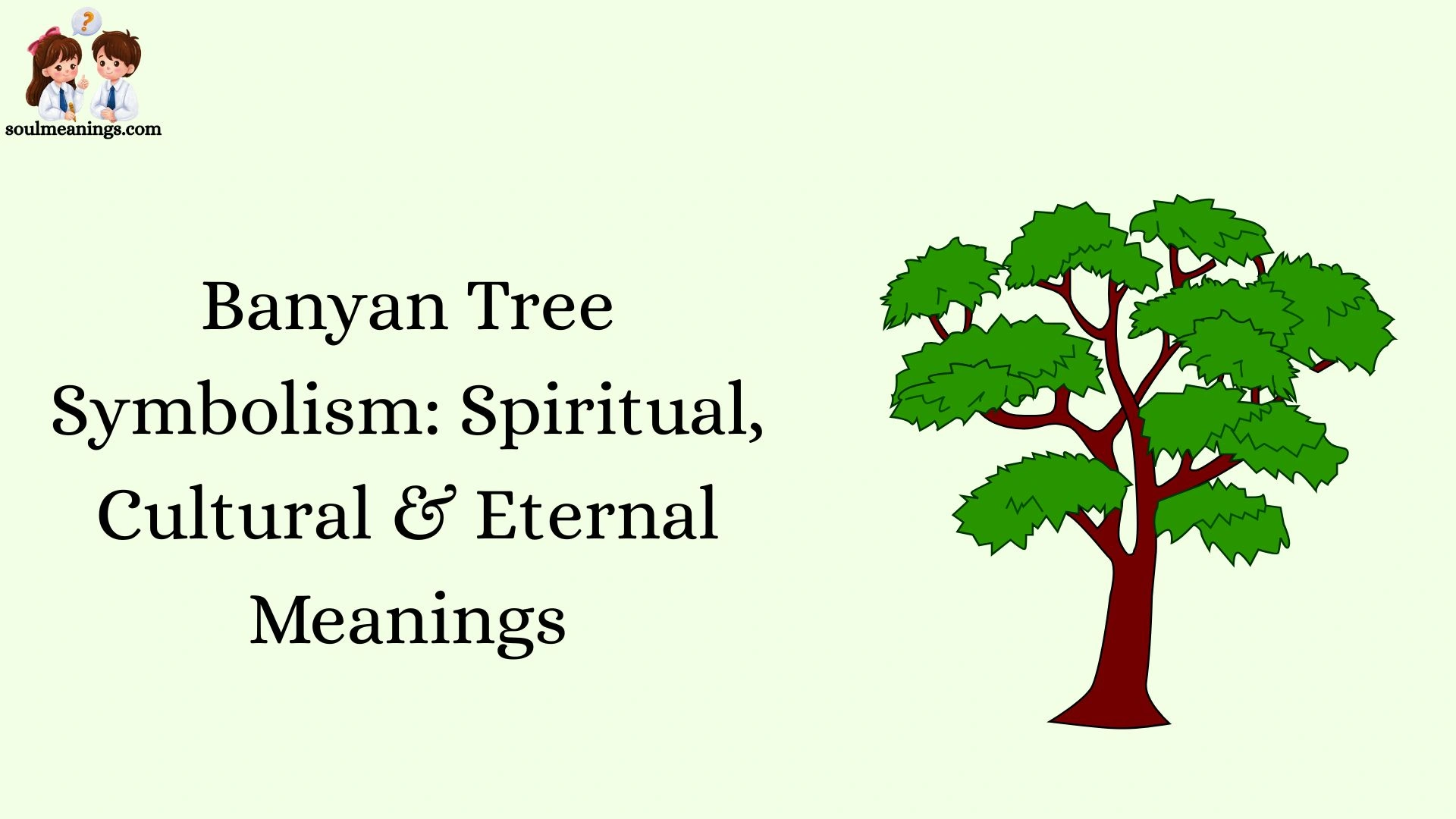
The banyan tree is a type of fig tree famous for its massive canopy and unusual growth pattern. Instead of growing upward only, it sends down aerial roots that eventually become new trunks. Over time, one tree can expand into an entire grove.
Physical Characteristics
Because of its unusual structure, the tree looks both ancient and alive with movement. This visual form strongly influences its symbolism.
• Thick central trunk with wide spreading branches
• Long aerial roots that grow downward from branches
• Dense canopy that provides large areas of shade
• Roots that eventually form new trunks
• A lifespan that can stretch for centuries
Because it seems to grow forever, the tree naturally became a symbol of continuity and endless life.
Historical Origins of Banyan Tree Symbolism
The symbolism of the banyan tree dates back thousands of years. Many early cultures connected large trees with sacred knowledge and spiritual presence.
Ancient Cultural Roots
In South Asian traditions, the banyan tree became associated with sacred wisdom and meditation. Monks and teachers often gathered under its shade to share knowledge.
Stories and spiritual teachings frequently describe the tree as a place where people seek enlightenment or guidance. Because it lives for centuries, it also became a symbol of time, memory, and tradition.
Early Symbolic Meanings
Ancient interpretations often included themes such as:
• Eternal life and rebirth
• Spiritual knowledge and learning
• Shelter and protection
• Connection between heaven and earth
• The passing of wisdom across generations
These meanings slowly traveled beyond their original regions through trade, literature, and storytelling.
Banyan Tree Spiritual Meaning
Many spiritual traditions see the banyan tree as a bridge between the physical and spiritual worlds. Its structure itself appears symbolic.
Tree of Eternal Life
The tree’s constantly expanding root system suggests life without a clear beginning or end. Because of this, it often symbolizes eternity.
Symbol of Enlightenment
The tree is also associated with reflection and meditation. Sitting beneath its shade is traditionally believed to encourage calm thinking and inner awareness.
Common spiritual meanings include:
• Enlightenment and inner wisdom
• The endless cycle of life
• Spiritual grounding and stability
• Shelter for seekers of knowledge
• Harmony between nature and spirit
These ideas continue to influence modern interpretations today.
Banyan Tree Symbolism in the United States
Although the banyan tree is not native to most of the United States, its symbolism has still become popular in American culture.
Today, it often appears in art, landscaping, and spiritual discussions.
Modern American Interpretations
In the United States, people often connect the tree with themes such as growth and resilience. Its powerful root network resembles the idea of building a strong foundation in life.
Symbolism in American Culture
| Context | Meaning in the USA | Common Associations | Notes |
| Personal growth | Life journeys and evolving identity | Self-improvement, reflection | Popular in motivational themes |
| Community | Support and connection | Family roots, unity | Often used in storytelling |
| Spiritual spaces | Peace and meditation | Yoga and mindfulness culture | Common in wellness imagery |
| Environmental symbolism | Respect for nature | Sustainability, long life | Used in eco-friendly branding |
Because of its peaceful image, the banyan tree is often used in spaces designed for calm and reflection.
Banyan Tree Symbolism in Different Cultures
While American interpretations focus on growth and resilience, other cultures emphasize sacred and philosophical meanings.
South Asian Cultural Meaning
The tree is traditionally seen as sacred and is often associated with spiritual learning.
Broader Cultural Interpretations
Across different traditions, it may symbolize:
• Divine knowledge and sacred wisdom
• Protection and community gathering
• Immortality and cosmic cycles
• Stability and deep roots
• Guidance through life’s challenges
Despite cultural differences, most interpretations share themes of longevity and wisdom.
Emotional and Psychological Symbolism
Symbols often affect emotions and identity. The banyan tree is strongly connected to feelings of safety and calm.
Psychological Associations
Because of its massive canopy and protective shade, it can evoke comfort and stability.
People often associate the tree with:
• Feeling grounded and secure
• Personal resilience during challenges
• Emotional stability and patience
• The wisdom that comes with time
• Deep connection to family or heritage
For many, it represents the idea that growth takes patience and strong roots.
Banyan Tree Meaning in Tattoos
Tree tattoos are very common, and the banyan tree carries unique symbolic meaning.
Why People Choose Banyan Tree Tattoos
Many tattoo designs focus on the tree’s roots and wide canopy, emphasizing life’s connections.
Popular tattoo meanings include:
• Strength through difficult experiences
• Lifelong personal growth
• Connection to family roots
• Spiritual awareness
• Protection and shelter
Because the roots can extend endlessly, artists often design tattoos that show interconnected branches and roots.
Banyan Tree Symbolism in Art and Design
Artists often use the banyan tree to express complex ideas about life and time.
Visual Symbolism
The tree’s structure allows artists to explore themes of interconnectedness and transformation.
It frequently appears in:
• Paintings about nature and spirituality
• Meditation room decor
• Landscape art and murals
• Book covers and symbolic illustrations
• Wellness and yoga branding
The visual beauty of its hanging roots also creates a powerful artistic image.
Banyan Tree and the Symbolism of Roots
Roots are one of the most powerful parts of the banyan tree’s symbolism.
Meaning of Expanding Roots
Unlike most trees, the banyan keeps growing new roots from its branches. These roots eventually become new trunks.
This feature suggests:
• Growth that continues throughout life
• Strong foundations for future generations
• The idea that every path leads to another
• The connection between past and future
• Community built from one shared origin
Because of this structure, many people view the tree as a symbol of life’s network of relationships.
Modern Cultural Use of Banyan Tree Symbolism
Today, banyan imagery appears in many modern settings.
Contemporary Uses
Its symbolism fits modern interests in mindfulness, nature, and long-term thinking.
You may see the banyan tree used in:
• Yoga and meditation centers
• Environmental campaigns
• Personal development themes
• Inspirational artwork and prints
• Social media posts about growth
In many cases, the tree represents a balanced life rooted in wisdom.
Misunderstandings and Symbolic Confusion
Although the banyan tree has mostly positive symbolism, confusion sometimes arises.
Common Misinterpretations
Some people assume all sacred trees represent the same ideas. However, different traditions attach different meanings.
Examples of confusion include:
• Mixing the banyan tree with the “tree of life” concept
• Assuming it belongs to only one culture
• Ignoring its philosophical roots in meditation traditions
• Treating it purely as decorative imagery
Understanding the cultural history helps preserve its deeper meaning.
How Banyan Tree Symbolism Has Evolved
Symbolism often changes as cultures interact.
Shifts in Meaning
Historically, the banyan tree symbolized sacred knowledge and spiritual teaching.
However, modern interpretations often highlight:
• Personal growth and resilience
• Connection and community
• Environmental awareness
• Mindfulness and reflection
These modern meanings show how ancient symbols continue to adapt to new cultural contexts.
Conclusion
The banyan tree stands as a symbolic bridge between spirituality, culture, and wisdom. Its majestic presence, aerial roots, and expansive canopy reflect strength, protection, and eternity.
Revered across religions, folklore, and modern spirituality, it reminds us of the interconnectedness of life and the enduring importance of tradition. Whether admired in Hindu sacred groves, mythology, or artistic expressions like tattoos and dreams, the banyan tree continues to inspire and teach valuable life lessons.
FAQs
1. Why is the banyan tree considered sacred?
The banyan tree is a sacred tree of life, symbolizing wisdom, protection, fertility, and spiritual growth, revered in Hinduism, Buddhism, and other cultures.
2. What does the banyan tree symbolize spiritually?
It represents eternity, interconnectedness of life, and a spiritual icon encouraging people to reach higher and follow tradition.
3. Where can banyan trees be found?
Banyan trees (Ficus benghalensis) are native to India and other parts of Asia, often seen in sacred groves, temples, and cultural landmarks.
4. How is the banyan tree used in art and culture?
Its symbolism appears in folklore, mythology, colors, dreams, and even tattoos, reflecting strength, wisdom, and spirituality.
5. What makes the banyan tree unique?
Its unique growth habits, including aerial roots and expansive canopy, make it a natural marvel, a mighty tree, and one of the greatest living symbols of life and tradition.