The number 13 has a strange reputation. Some people avoid it at all costs, while others embrace it as lucky or powerful. From missing hotel floors to pop culture references, it shows up in subtle and bold ways across daily life.
In the United States, the meaning of 13 is especially layered. It’s tied to superstition, but also to history and identity. That tension makes it one of the most talked-about numbers in symbolism.
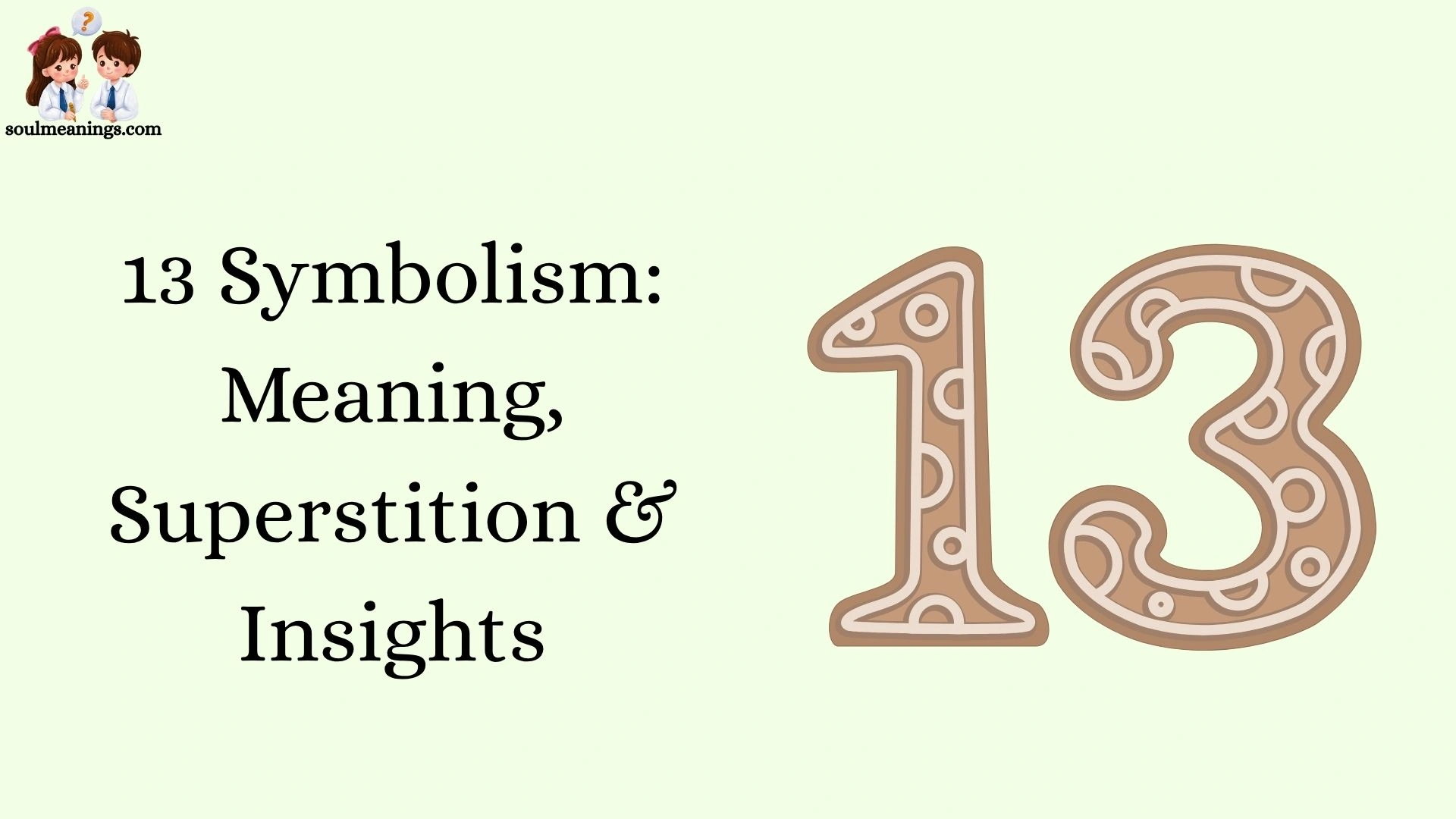
This article explores 13 Symbolism | Meaning, Superstition & Cultural Insights, unpacking where these beliefs come from and how they still shape modern thinking today.
What Does the Number 13 Symbolize?
The number 13 stands out because it breaks patterns. It follows 12, a number often seen as complete or perfect. That contrast gives 13 a sense of disruption.
Core Meanings
• Bad luck and misfortune in Western culture
• Transformation and change beyond completion
• Rebellion against norms or expectations
• Mystery and the unknown
Why It Feels Different
In many systems, 12 represents order—12 months, 12 hours, 12 zodiac signs. So 13 feels like stepping outside structure. Because of that, it’s often seen as unpredictable or even risky.
Historical Origins of 13 Symbolism
To understand modern beliefs, it helps to look back. The fear and meaning of 13 didn’t appear overnight.
Ancient and Religious Roots
• Norse mythology tells of 13 guests causing chaos at a feast
• In Christian tradition, 13 people attended the Last Supper
• Judas, the betrayer, is often linked to being the 13th guest
Because of these stories, 13 became associated with betrayal and disruption.
Medieval Europe and Superstition
Over time, these ideas spread across Europe. Fear of 13 became common, especially when tied to events like Friday the 13th.
People began avoiding the number in daily life, reinforcing its negative meaning.
13 Symbolism in the United States
In the U.S., the number 13 carries both fear and pride. That dual meaning makes it unique.
Everyday Avoidance
• Many buildings skip the 13th floor
• Airlines often skip row 13
• Some people avoid weddings or events on the 13th
This shows how deeply the superstition still influences behavior.
A Symbol of American Identity
Interestingly, 13 is also tied to national history.
• 13 original colonies formed the United States
• The U.S. flag once featured 13 stars
• The Great Seal includes repeated groups of 13
So while it’s feared in one sense, it’s also foundational to American identity.
Table: 13 Symbolism Across Contexts
| Context | Meaning in the USA | Common Associations | Notes |
| Superstition | Bad luck | Friday the 13th, fear | Widely recognized belief |
| National History | Unity and origin | 13 colonies | Positive patriotic meaning |
| Religion | Betrayal and disruption | Last Supper | Influences Western views |
| Modern Culture | Rebellion and uniqueness | Tattoos, branding | Often reclaimed positively |
| Personal Beliefs | Transformation or growth | Life changes | Depends on perspective |
Spiritual Meaning of the Number 13
Beyond superstition, many people see 13 as deeply spiritual. It can represent cycles, endings, and new beginnings.
Symbol of Transformation
• Ending one phase and starting another
• Growth through challenge or disruption
• Moving beyond comfort zones
Feminine and Lunar Connections
Some traditions link 13 to lunar cycles, as there are about 13 full moons each year. This connects it to feminine energy, intuition, and rhythm.
Why Is 13 Considered Unlucky?
This is one of the most common questions, especially in the U.S.
Cultural Reinforcement
• Movies and media often portray 13 as scary
• Stories pass down fear through generations
• People remember negative events tied to it
Psychological Effect
Because people expect bad luck, they may notice it more. This creates a cycle where belief reinforces experience.
Friday the 13th Meaning and Fear
Friday the 13th combines two fears into one. Friday has long been seen as unlucky in some traditions, and pairing it with 13 increases anxiety.
Common Associations
• Horror movies and suspense themes
• Avoidance of travel or major decisions
• Increased awareness of “bad luck”
However, studies often show no real increase in negative events. The fear is mostly cultural and psychological.
Emotional and Psychological Symbolism
Numbers can affect how people feel, even subconsciously. The number 13 carries strong emotional weight.
Common Emotional Associations
• Anxiety or unease
• Curiosity and intrigue
• Excitement about breaking norms
Identity and Personality Signals
People who embrace 13 may see themselves as:
• Independent thinkers
• Risk-takers
• Nonconformists
So, the number can reflect personal identity as much as belief.
13 in Modern Culture and Media
Today, 13 shows up everywhere—from entertainment to fashion. Its meaning continues to evolve.
Pop Culture Usage
• Horror films highlight its “scary” reputation
• Celebrities sometimes embrace it as lucky
• Social media uses it for edgy or bold branding
Tattoos and Personal Symbols
Many people choose 13 tattoos to represent:
• Strength through adversity
• Personal transformation
• Defying superstition
Is 13 Ever Considered Lucky?
Yes, and this view is growing. Not everyone sees 13 as negative.
Positive Interpretations
• A number of change and growth
• A symbol of individuality
• A sign of hidden opportunities
In some cultures outside the U.S., 13 isn’t feared at all. This shows how meaning depends on context.
Cross-Cultural Meanings of 13
While the U.S. often views 13 as unlucky, other cultures see it differently.
Global Perspectives
• Some traditions see it as balanced or natural
• Lunar-based cultures connect it to cycles
• Others don’t attach strong meaning at all
This contrast highlights how symbolism is shaped by culture, not fixed rules.
Misunderstandings and Controversies
The meaning of 13 isn’t always clear-cut. Misinterpretations can create confusion.
Common Misunderstandings
• Believing it always means bad luck
• Ignoring its positive historical meanings
• Assuming all cultures fear it
Neutral Perspective
It’s important to separate tradition from fact. While beliefs are meaningful, they don’t control outcomes.
How the Meaning of 13 Has Changed Over Time
Like many symbols, 13 has evolved. Its meaning today is more flexible than in the past.
Then vs Now
• Historically feared due to religious stories
• Reinforced by superstition and tradition
• Now often reinterpreted as empowering
Modern Shift
Today, many people reclaim 13 as a symbol of strength and uniqueness. This shift reflects changing attitudes toward fear and individuality.
FAQs
Why is the number 13 feared in the United States?
It’s mainly due to historical and religious stories. Over time, culture and media reinforced the idea of bad luck.
Is 13 always a bad omen?
No, not at all. Many people see it as a symbol of change or personal power.
Why do buildings skip the 13th floor?
Developers often skip it because of customer discomfort. It’s more about perception than actual risk.
What does 13 mean spiritually?
Spiritually, it often represents transformation, cycles, and new beginnings.
Is Friday the 13th really unlucky?
There’s no strong evidence. The fear is mostly cultural and psychological.
Why do some people choose 13 tattoos?
They often see it as a symbol of strength, rebellion, or personal growth.
Conclusion
The number 13 is more than just a superstition. It’s a symbol shaped by history, culture, and personal belief. In the United States, it carries both fear and meaning, reflecting a mix of tradition and identity.
At the same time, many people are redefining what it stands for. Instead of bad luck, they see transformation, courage, and individuality.
In the end, 13 Symbolism | Meaning, Superstition & Cultural Insights shows how even a simple number can hold deep and evolving meaning. What it represents often depends on how you choose to see it.